Showing posts with label scottish football books. Show all posts

Friday, November 30, 2012

Brought to book

Book Week Scotland seems as good an excuse as any to have a rummage through the bookshelves.

To mark this celebration of all things book related, I shut my eyes and picked out four football tomes at random.

And a varied assortment it proved to be.

From Faultless referees in the Wankdorf, through sockless wonders of the 1980s and lawnmower related disasters, to a man who really, really disliked us Scots.

That's the thing about books. All human life lies within.

Refereeing Round the World by Arthur Ellis


We'll start with an Englishman. Or a Yorkshireman, which might not be quite the same thing.

Referee's memoirs are not a modern phenomenon. Before Pierluigi Collina and Graham Poll, there was Arthur Edward Ellis with Refereeing Round the World, published in 1954.

Arthur Ellis of Halifax seems to have been a have whistle, will travel kind of chap.

His career took in three World Cups, the Olympic Games and every round of the first ever European Cup.

He was also the referee for the Battle of Berne in 1954 when a football game struggled to breakout amidst a complete breakdown of Hungarian-Brazilian relations.

But his first taste of international football was a little closer to home:
"This was my first International as a referee - Wednesday, November 12th, 1947 - and what a ground to make your debut...Hampden Park, Glasgow! True, the attendance was no more than 100,000 people (the ground holds nearly 150,000 people), but all the same it was a terrifying experience.

"I had, of course, heard a lot about the Hampden Roar, but I had never sampled it, and Mr Faultless, that wonderfully named Scottish refereee, did not make my nerves any better by suggesting I use his whistle, which was of a higher tone than the usual whistle, and therefore better fitted to combat The Roar. I accepted his offer.

"If you think it strange that in an International do not take the field side by side, you should go to Hampden. They will have no such sentimental nonsense, as they call it. They believe in frightening the opposition with the pre-match ceremonies.

"And then there is the Hampden Roar. To me it seems to start as moan behind one goal and then, within seconds, to engulf the whole stadium. It is terrifying, indescribable. It is like taking a punch between the eyes."
Lost days and lost glories? Not quite:
"My experience of it lasted only 20 minutes. Then it fade, probably because Scotland were so bad that not even the Hampden Roar could help them."
Wales beat Scotland 2-1.

And Mr Faultless definitely did exist.

Giffnock's Charlie Faultless was, like Ellis, called into action for a memorable 1954 World Cup game.

His quarter final match at the Wankdorf Stadium (there's always a snigger) in Berne saw Austria beat Switzerland 7-5 and remains the highest scoring World Cup match in history.

Having trailed 3-0 inside 20 minutes, Austria led 5-4 at half time despite missing the penalty that Mr Faultless saw fit to award.

Charlie Nicholas: The Adventures of Champagne Charlie by David Stubbs


Younger readers might most readily associate Charlie Nicholas with Jeff Stelling and that rogues gallery of former players getting excited while the nation watches them watch telly every Saturday.

But back in the day it was Charlie who excited us with his goalscoring feats, his extravagant talent and his tabloid friendly extra-curricular pursuits.

His not always satisfying experience at Arsenal in the 1980s provides the focus for The Adventures of Champagne Charlie by David Stubbs.

It's commendably non-judgemental, choosing instead to salute Charlie's cheeky chappy joie de vivre.

Some choice quotes, however, suggest this was a lifestyle that many a modern manager would balk at.

Charlie on drinking:
"See, four, five, six pints. That to me isn't a real drink."
On Charlie's fashion sense:
"What seemed most to disconcert the authorities was Charlie's flagrant disregard for sockwear, the wearing of. One might have thought that with all the myriad problems besetting Scottish football at the beginning of the eighties that sock inspections would be low on most managers' list of priorities. But no. Charlie himself preferred to wear no socks - by necessity, he claimed, rather than affectation. 'I spend most of my money on clothes,' he explained. 'And that means going without socks in some casual outfits.'

"Socklessness being considered a breach of some arcane details of professional footballing etiquette, however, Charlie complained that he was forced to walk around with a spare pair of socks in case his assistant manager caught him at the club baring his ankles for shame - whereupon, if reprimanded, he would have to nip into the gents for a quick socks change."
Charlie and women:
"The more spurious the story, the more prominent was the accompanying photograph of Ms Bazar, all lipstick and bustiers. In 1988, the News of the World ran a series of her exposes on her nights out - and in - with her numerous and notable gentleman friends. She ranked them in order of impressiveness. And while the likes of Duran Duran's John Taylor and Herr Flick for TV's 'Allo, 'Allo merely received honourable mentions for the merits of their unmentionables, top of the Tree of Tumescence sat a proud Charlie."
It was George Graham who called time on Nicholas at Arsenal.

They won the League Cup together but the writing was surely on the wall from the moment Graham arrived as manager:
"Standards in British society are falling. I'm going to make sure, however, that they don't fall at Arsenal."
Patrician pomposity was always going to trump an often misfiring playboy prince.

It's for Graham to judge how successful he was in holding all his players to account off the field.

In the Firing Line by Jim Leighton and Ken Robertson


One wouldn't expect Jim Leighton to find himself linked to a Ms Bazaar in the tabloid press.

Bespectacled off the pitch and less than athletic looking on it he nonetheless enjoyed a career of longevity and consistency that included a battle back from the brink of obscurity.

In the Firing Line covers that career, from humble beginnings ("humble" actually appears in the second sentence) to European glory, the bitter Manchester United experience, the footballing resurrection and World Cups with Scotland.

There's also a touch of the Mr Bean about our hero.

Before the 1984 Scottish Cup final against Celtic:
"I can tell you now I came within a whisker of missing that final.

"In fact the accident that I was involved in on the Monday prior to that game could have ended my career. I was at home, cutting the grass and looking after our two children, when my electric lawnmower became choked with grass. I was trying to free the blades with my hand when my daughter Claire, who was then only three, moved the switch on the handle. Oddly enough, I'd been looking at a warning about disconnecting the lawnmower before cleaning it only seconds earlier. I'd ignored it and paid the price. When Claire accidentally put the power back on, a flying blade sliced open the pinkie of my right hand and there was blood everywhere. It could have been worse. I might have lost fingers and ended my days as a goalkeeper in that careless moment. But my injury was serious enough - especially with the final looming - and I was in a panic.

"[Alex Ferguson] called me all the silly buggers under the sun. I was told I should not have been cutting the grass or playing with my children in a cup-final week. When Ferguson's tirade subsided he told me to go home and stay away from Pittodrie during the build-up to Hampden.

"He was entitled to feel apprehensive, for Aberdeen is like a village in terms of gossip. I had ample proof of that over the next few days when my team-mates phoned to tell me about the wild stories which were circulating about my mishap. Rumours had it that I had lost a finger, cut off my hand or electrocuted myself. But the best best tale of all emanated from one of Gordon Strachan's neighbours. According to his information, I was dead."
Alive, and with a full complement of extremities, Jim played in Aberdeen's 2-1 win.

In 1986 Aberdeen were back in the final:
"I had another Scottish Cup final injury scare that season. This time it was because of my attempts to keep fit while recovering from a broken finger, which had ruled me out of Scotland's game against Romania at Hampden. I thought it would be a good idea to play tennis, as sport in which my damaged left hand would not be involved. That turned out to be a big mistake. I tripped over a stone and tore my ankle ligaments. With the final just four weeks away, I feared the worst. To compound the matter, I could not tell my manager that I had hurt myself playing tennis of all things. A white lie seemed the best bet, so I informed him that the injury had occurred while I was playing with my kids."
A reserve match at Ibrox confirmed that Jim would be fit to play in the final:
"Ferguson phoned my home on the night after my comeback in the reserves. Linda took the call and asked if he wanted to speak to me. 'No,' said the manager, 'just tell him that if he goes near that bloody grass this week, I'm going to kill him.' This was a reference to my previous mishap with the lawnmower. Ferguson has a very retentive memory."
Indeed. It's a hallmark of all the great managers that they remember the time their goalkeeper almost chopped his fingers off the week before a major cup final.

Sir Alf by Leo McKinstry


We'll finish with another Englishman. A World Cup winning Englishman.
O wad some Power the giftie gie us
To see oursels as ithers see us!
Well, we know how Sir Alf Ramsey saw us. And it wasn't entirely uncritical:
"Not since the Duke of Cumberland has any Englishman had a more visceral dislike of the Scots. So strong was this emotion that it broke through his wall of reserve and he became more demonstrative, more voluble.

"The great Derby defender Roy McFarland told me that Alf's passion had not waned by the seventies:

'For me it was the only time I heard him swear. Just before we went out on the field, as we were going out the door he'd say "Come on boys, let's beat these Scots fuckers." It was a shock to me.'

"John Connelly, the Burnley winger, has the memory of Alf's anger at any concession to Scotland:

'Once, when the ball ran out when we were playing at Hampden, I went and fetched it and threw it at a Scot. They took a quick throw, went down the line and damn near scored. Watching the film of this afterwards, Alf said to the rest of the lads, 'Just watch this pillock. What do you think of that, running after the fackin' ball for a fackin' Scotsman.'
When Ramsey took over at Birmingham City, a young Jimmy Calderwood was one of a number of Scots in the squad:
"Sir Alf said: 'Now I know you lot fucking hate me. Well, I have news for you. I fucking hate you lot even more.' But, you know, I never missed a game for him. He really was a fantastic manager."
Quite a complex fellow, was Sir Alf. What injury, real or perceived, we as race had inflicted on him is unknown. But this was a man who refused to wear Paisley pattern pyjamas.

He could admire our individual qualities though:
"Ken Jones tells this story of a banquet at Hampden after a game: 'I was there talking to Billy Bremner when Alf came past. He looked straight at Billy and said: "You're a dirty little bastard, aren't you. But by Christ you can play."' In return, Bremner was impressed by Alf as a manager when he served under him in a match between Wales and the rest of Britain."
Book Week Scotland runs until Sunday

Sunday, September 23, 2012

Book Review: Budgie

A Twitter correspondent was reminding me yesterday of the time I saved two penalties in one game.

As my personal sporting achievements go that remains right up there with winning the Longniddry Gala Primary 4 Short Tennis Open (Doubles) and clinching the runners-up spot in the Hawkhill Hibs Supporters' Club Bowls Day Oot.

I also like to think it's bestowed on me honorary life membership of the "goalkeeper's union."

Goalkeepers, they say, are crazy.

The charge sheet for the crime of craziness is probably quite long.

But you'd guess John Burridge would feature extensively. Probably appearing as his own character witness.

His eccentricities are laid bare in Budgie - The Autobiography of Goalkeeping Legend John Burridge.

The japes, the capers and misadventures are recounted with glee.

But there's a more complex side to the 'keeper who once hoisted himself onto the crossbar and perched their - Budgie-like - when his side were in the ascendancy.

The extravagant warm up routines, the tales of his wife being asked to fling pieces of fruit at him as he sat watching the TV to test his reflexes. They all served a purpose.

They kept him in the game. Playing, coaching, managing. Without that what was there left of John Burridge?

It took an intervention and a spell in The Priory before he found the answer to that question. Many are the stories of football as a cause of addiction or the setting for addiction. This is different. This is football as the addiction.

The book begins with that episode. A dramatic opening to be sure but one that does colour what comes after.

Because there is darkness to some of his behaviour that goes beyond the light-hearted eccentricities that you can tell he'd love the reader to shower with unconditional love.

The constant battles with managers - recounted here as heroic Budgie against ignorant authority - point to a man burdened by the weighty chip on his shoulder.

(They're recounted with gusto though - Budgie crawling through a window after Derby manager Arthur Cox had locked him in his office to escape and sign for Sheffield United, a ruck with Ossie Ardiles in the tunnel after a Southampton game, Murdo McLeod hitting Budgie over the head with an early 1990s mobile phone as Budgie physically attacked Alex Miller.)

By the end of the book Budgie has turned from the lovable scamp of his imagination into a bitter ex-pat (albeit one who fell victim to a mysterious and serious road accident in the Middle East), pining for an England that probably never existed and certainly one that he'd not have known growing up in a Cumbrian colliery village.

You'd be waiting for a rant about political correctness if he hadn't already covered that with a typically sepia-tinged defence of his friend Andy Gray and Sky sexism furore.

Lost worlds are a theme.

It’s difficult to envisage any player in the modern era having a career to mirror Burridge’s. 30 clubs, the English and Scottish leagues from bottom to top and back again.

And difficult to imagine any player getting away with quite so many "antics" - the practical jokes, the repeated fall outs with coaches, the studs sharpened to "do" the metatarsal of an opposing centre forward - in Sky's brave new world.

Changes for the better or the worse? Budgie's not a dispassionate enough chronicler of his own life and times to answer those questions.

Including the word "legend" in the title of an autobiography, the mood of nostalgia and the residual bitterness (the lack of international recognition clearly still rankles) suggests a man that's already made up his mind about his place in the world.

He's just waiting for the rest of us to catch up with him.

Which is all a bit of a shame. Because this was a career that was extraordinary in its own way, a career marked by an ability to connect with fans that is beyond many a footballer.

And if you like your anecdotes unseasoned by subtlety there's much to enjoy here - you won't read a more self deprecating tale of a footballer losing his virginity, you might never read again of a Hibs goalkeeper riding his moped through the streets of Edinburgh, discovering too late that someone has deposited a "present" in his crash helmet.

All of that, much like a career taking in over 700 professional games but no England cap, doesn't quite satisfy.

The Budgie that's uncovered is much harder to warm to than the lovable scamp of a goalkeeper of popular memory. That might be because he's never quite learned to warm to himself.

Buy 'Budgie' at Amazon

Monday, April 02, 2012

Tom Finney's Guide to Football Success

Tom Finney turns 90 this week.

A legend at Preston North End where he scored over 200 goals in 473 appearances he also won 76 England caps scoring 30 goals.

The Second World War meant his Preston debut was delayed until 1946. He went on to be voted England's player of the year in 1954 and again in 1957.

Finney said:

"When I won again in 1957 I had moved to a centre-forward role at the age of 35. A bit late in the day for that maybe, but I scored 28 of our 80 goals and felt the second award was perhaps harder earned."

Bill Shankly said of him:

"Pele was a great player. He must rank one of the best of all time. I've said that Tommy Finney was the best I've seen and I'd bracket Pele, Eusebio, Cruyff, Di Stefano and Puskas up there with him."

Tommy Docherty, perhaps stealing a Shankly line, said:

"Tom Finney was so good he could have gone through any defence while wearing a heavy overcoat. There have been few better players in history."

Here, you feel, was a player who inspired his colleagues as much as he inspired supporters. The Preston plumber who became a gentleman great of the game.

What could we learn from him?

In 1958 Billy Wright's Book of Soccer went some way to answering that. Here is:

How I'd Set About Making The COMPLETE FOOTBALLER - By Tom Finney


What is the greatest essential for success in football?

This is one of a series of questions I am frequently asked concerning what is necessary not just to take a player to the top of the ladder, but also to make a really good footballer out of a promising one.

Let's face it, there cannot be any ONE essential although love of the game, and a desire to play if for enjoyment is paramount. Skill and judgement in execution come next, then confidence in one's ability. Linked with all three is technical knowledge, such as knowing when and where to part with the ball. That is what we mean by the expression "a football brain." Last, but by no means least, comes physical fitness.

Now do not get me wrong, or imagine that I am spoil-sport, when I say that so far as fitness is concerned I think alcohol and tobacco should be taboo. Frankly, I'd cut out both drinking and smoking, for if a young fellow aims to have a long career in the game he must be prepared to make sacrifices. Both Stanley Matthews and Billy Wright are non-smokers and non-drinkers, and think how long they have been turning in wonderful performances. To my mind they are the perfect examples of physical fitness, and, as I remarked earlier, to retain their skill and fitness have been prepared to make sacrifices.

In the case of youngsters that goes for social pleasures as well. Dancing - although frowned upon after Wednesday by many clubs - is all right within its limit because of the exercise value - but too much of it is not, especially if it means keeping a young fellow up late. Never forget an athlete, no matter how tough he may consider himself to be, needs plenty of rest and he will just not get it if he is robbed of sleep by a succession of late nights.

One of the biggest questions asked today, especially since the rise to prominence of European and South American soccermen, is: "What should a young footballer develop first of all? Is it physical fitness or ball control?" What I always stress, before giving an answer to this query, is that you cannot succeed without either. In the case of a youngster I would suggest that first of all he learn how to master the ball to the utmost of his capacity. After all, an active lad of sixteen, in reasonably good health, ought not to require much in the way of P.T. and other strenuous road work to put him into shape for a game of football. He ought to be at his peak - or very near it - and thus need only some sprinting exercises each day plus a moderate amount of gym work.

In football, as in other sports, too many young fellows have attempted to crowd all their practice into a short time and failed. To become an expert - or even proficient - at anything demands patience. That is why I say ball control should be practised by degrees - one thing at a time - unless it comes naturally. I have always said, too, that it can be acquired to only a certain extent. Some are born with it. Alex James and Stanley Matthews, two of the most wonderfully gifted footballers in the history of the game, are perfect examples. Others have the idea, or the knack, which can be developed. Some, however, try as they will, make little or not progress because they do not possess the faculty. If you haven't got it you just cannot put it there!

The proof of this is that some lads try, try, and try again, and are bitterly disappointed because they still lack the touch whereas others have a natural flair for the game like Bryan Douglas (Blackburn Rovers), Jimmy Greaves (Chelsea), and the late Duncan Edwards (Manchester United, and soon they are adding to the talents they already possess.

Much the same applies when it comes to teaching the others. Alex James, it is generally accepted, was a magnificent football. He knew every trick in the book, as well as many of his own invention which others have since tried to copy without success, such as what was called his "double shuffle." Yet he could never impart his skill to those he tried to coach. The fact is that Alex James just did not know how he did it. It just happened. Alex did not sit down with pencil and paper and work out his movements. Neither did he travel miles to watch other stars perform. He was a natural footballer who performed his wonderful deeds instinctively and smoothly. The same thing can be said of Stanley Matthews - a player I admire so much as a footballer and as a gentleman. Stanley cannot demonstrate his baffling swerve to order. He cannot tell you what he does or how he goes about it. Apart from this it is very difficult to demonstrate unless one is gifted in this direction, too, for the "atmosphere" is missing. The tenseness of the crowd and the challenge of an opponent.

Ought a youngster to practise heading at an early stage in the game? That's an old question, with many folk expecting one to warn against it for fear of a lad hurting his "napper," and I'm afraid I've surprised many by stressing the sooner a youngster learns to head a ball correctly the better it will be for him. Mind you, he needs to be careful about the way he approaches the matter or he might do himself some harm. I always stress to youngsters that they must avoid striking the ball with the top the head. "Always make sure you can see the ball when trying to head it," is my tip. Then, and only then, will you strike the ball with forehead which, after all, is the right and proper place.

It has only been of recent years that young players seem to appreciate that heading is one of the basic skills. I remember, when touring with the England team in South America in the spring of 1953 that the Latins were most impressed with our headwork. Apparently they'd seen noting to equal it from any other visiting teams. And after we had left for home many club coaches gave instructions that heading was to be taken much more seriously. Personally I was surprised to that the Latin Americans, so thorough in all their other preparations, had neglected this important side of the game. After all, the more skilful you are in directing the ball in this manner, whether to get out of trouble as a defender, or to start a valuable attack as a half-back or forward, the more valuable will you be to your side. It cannot be stressed too often, by the way, that you do not need to be a big fellow to be a good header, as Billy Wright has so often demonstrated. The two secrets of success are timing and contact. Learn how to rise to the ball. The more spring you have the better, and, again let me point out, this is one thing that can be acquired.

So far as the heading technique is concerned there are many ways of practising the art, either singly or in pairs, but gaining complete control is the most important aspect of all. Some of the Continental and South American stars are as good as top-of-the-bill jugglers and have acquired the skill only after long hours of practice.

Notice how the word "practice" keeps appearing? After all, we agree there is no short cut to soccer success and if one is to learn how to take the swinging ball and then later develop the headed pass, one has to work at it. I've known Jackie Milburn - who never claimed to be a great header of the ball when moved from the wing to take over the centre forward position - have colleagues pump over centres at all heights and speeds for hours on end so that he could run on and ram it goalwards. Milburn worked hard at this work - and he succeeded in becoming a very useful header of a ball.

Remember how he put Newcastle into the lead in a Cup Final with a snorter of a header against Manchester City. Again hard work paid a handsome dividend...

As a student of football - as are most young fellows who now come into the game - I'm always intrigued when watching the great stars of world football perform in a big match. It really is interesting to notice how they have mastered the various skills, and if I'm asked to name the most complete footballer I've ever seen Johnny Carey (Manchester United and Eire), now successfully managing Blackburn Rovers, is the man who gets my vote. "Gentlemen Jim," as he was known, filled every position except goal for Manchester United. Be it full-back, half-back, or forward, Johnny could be relied upon to turn in a first-rate show. His all-round knowledge stood him in good stead. And all the time, as he so often told youngsters, he was learning something new about the game.

Alf Ramsey (Spurs and England), now manager of Ipswich Town, was another gifted all-rounder. He played at inside and centre-forward and centre-half before settling down into become the most-capped of modern full-backs. A fine player who possessed the ability to make other fellows give of their best.

If I were given the task of developing a promising youngster into an all-round footballer I would start by building on the essentials he would be expected to possess, such as natural ability and a love of the game, a willingness to strive. I would also see that his temperament was properly schooled, and then proceed to advance his knowledge of the basic arts and improve his execution of them.

The wisest youngster is the one who will listen attentively to the old head who had been through the mill. I personally would not waste much time on a lad if it soon became clear that he was not prepared to listen to advice from someone who has been in the game a long time. I have always found that professional players are willing - anxious in fact - to help youngsters if they are prepared to help themselves, but they will not be bothered to pass on their valuable tips to those who "know it all," or, perhaps, think they do.

For any youngster who wishes to make headway in the game there is no better training for him to go along and study at first hand the men who are outstanding in the various aspects of soccer.

For ball control Stanley Matthews is of course out on his own. He possesses uncanny ability but, as I know through training with him, he is always hard at practice. Never does Stanley let up. Always is he out to improve himself - it that is possible. For any young man who wants to watch an artist in the art of ball control Stanley Matthews is the man for him to go along and study. Peter Doherty, Wilf Mannion, and Jimmy Logie, were others who became masters in this art, and when it comes to using the long ball accurately, the two men in present-day football I'd advise any would-be star to study are Ronnie Allen of West Bromwich Albion and Fulham's Johnny Haynes. They are a joy to watch with their precision passing. To play alongside them can be a dream for their colleagues.

In these days when so many footballers talk about the game I am rather surprised that one subject which rarely gets the "air time" I think it deserves concerns the art of correctly kicking a football. The public really loves to see a footballer volley the ball in clearing. How a footballer thrills to the crack of hitting the ball cleanly and perfectly. My colleague Willie Cunningham, who is a Scottish international, is one of the finest exponents of this art and a worthy successor the such renowned defenders as Andy Beattie (Preson), Eddie Hapgood (Arsenal) and Alf Ramsey (Spurs). All of these players, too, were exceptional men who had mastered the art of positional play...

All the world loves to watch a sharp-shooter on parade and these days, after a period when we seemed to lag behind the rest of the world in the shooting art, there are quite a number who popped into prominence as crack shots. They include Charlie "Legs" Fleming of Sunderland and Scotland, Jimmy Mullen of Wolves and England, and Spurs' centre-forward, Bobby Smith,

Smith, a product of the Chelsea Youth Scheme, was a promising player at Stamford Bridge before he joined the Spurs really to win fame, but I think a good deal of his success can be traced back to the work he put in after doing his chores as a ground-boy. It was not an uncommon thing for Bobby to spend hours by himself surrounded by a dozen or so footballs. From all angles, and various distances, he used to fire in shots at goal. At first he concentrated upon the "placing" of his shots. As Bobby developed accuracy so did he develop power. That is why today he must surely rank among the most accurate of current sharpshooters possessing a pile-driver of a shot.

What of headwork? Again I do not think any young chap could do better than go along to watch either Billy Wright or Nat Lofthouse perform. In one instance - Billy Wright - you have the defender using his head well. In Nat's case he uses his "napper" all the time as a means of either scoring or "making" goals for his colleagues. Watch, by the way, how both these great headers of a ball time their leap into the air. It seems they rise just a fraction after their opponents - and the outcome is that they are still rising when their opponents are returning to ground. Experts who have studied Billy and Nat as ace headers of a ball swear this timing is one of the secrets of their success.

In tackling Billy Wright is again outstanding. Like Harry Johnston, who filled the England centre-half position before him, Billy is very powerful in the tackle and possesses the ability to come away with the ball and use it quickly and accurately. Once has gained possession Billy doesn't look up and admire his handiwork. He gets on with the game and uses the ball when time is still on his side.

When you come to discussing speed off the mark Stanley Matthews is still in a class by himself for a short burst. His acceleration from a standing start is little short of marvellous, especially when one realises he is forty-three years YOUNG. His tremendous acceleration makes all the difference between getting the ball and gaining a start on the opposing full-back. Once more I must point out that consistent practice is one of the reasons for Stanley Matthews' acceleration. Not for Stanley the glory of sitting back and enjoying his success. I've watched him, all by himself, put everything he possesses into this section of training. He still has the zest of a schoolboy. Maybe that's why he remains fitter than a large percentage of men who are twenty years younger. In every way is he an object lesson for the lad who wants to get a close-up of the master of soccer acceleration.

In the past there used to be mixed views about young players moving about the field, trying one position after another until they found the one they enjoyed filling most of all, but I think it an excellent idea. The more experience a youngster can gain the better in the long run it will be for his game.

Can a youngster learn much though watching the star footballers when they take part in a match. I believe young footballers can benefit a good deal, especially if they have a receptive mind and do not quickly forget what they seem for I know there are dozens of hints to be gained through watching the play of the masters, but the "big-head" will either be finding fault or to blasé to think he has anything to learn.

Last, but by no means least, what would I advise about the very important thing, keeping one's temper? I can reiterate the old proverb: "Keep your temper which nobody else wants." Learn to be a good loser. Be prepared to lose with a smile. It's never a disgrace to be beaten by another man on the day's play, and nothing is ever gained by resorting to shady tactics to save your own face.

YOUR BEHAVIOUR IS A GUIDE TO YOUR TEMPERAMENT, AND ONLY YOU CAN CONTROL THAT!

Never forget, either, the complete footballer is the one who never forgets that soccer is a GAME.

Thursday, January 19, 2012

And if you know your history...

So yesterday was a day without Wikipedia.

How did we all cope?

Maybe by using the various workarounds that let you bypass Wiki's self-imposed protest blackout. Or whiling away the hours following STV's #fitbawiki chat on Twitter.

Or you could have gone old school and picked up a book.

A book like Maurice Dougan's Hibernian History Handbook.

It's a real treasure trove of information for Hibs fans and those with an interest in the history of the Scottish game.

Maurice is a big Hibee - although not as "big" as his brother - so this has been something of a labour of love.

Well worth the effort though.

The full history of the club is covered, season by season, from the very beginning to the end of the 2010-11 season.

There's a list of all 1399 squad members from 1875 to 2011, a complete list of club honours and a rather fetching infographic detailing Hibs' European exploits.

There's also a list of managers and their records. I note with interest that John Collins has the highest win percentage since Alex McLeish whose own record was the highest since Eddie Turnbull.

None come close to "The Board" though. They enjoyed a 100% record in the three games between the departure of Bob Shankly and the arrival of Willie McFarlane in 1969.

Maybe that will inspire Rod Petrie. Think of the money it would save him.

The Hibernian History Handbook is available at a number of outlets across Edinburgh including the emporium of delights that is The Football Programme Shop on Albion Road.

Or you can buy it online

Wednesday, November 16, 2011

1962: Hibs Move To End Relegation

Outrage reigned last month when the idea of removing promotion and relegation from England's top flight was discussed.

The Guardian reported Richard Bevan, chief executive of the League Managers Association, as saying:

"There are a number of overseas-owned clubs already talking about bringing about the avoidance of promotion and relegation in the Premier League, If we have four or five more new owners, that could happen."

Turning the English Premier League into a franchise model would guarantee income, make it easier to see a return on investments. Even if that meant raising the drawbridge.

There was a blizzard of derision in the face of this affront to what's left of the purity of the sport.

Wigan's Dave Whelan went as far to suggest that he'd take his club out of the EPL if this ever happened.

I've said before - and, cause I like to go on a bit, I'll probably say again - even in its daft ideas modern football is far from original.

So this passage from Tom Wright's new book Hibernian: From Joe Baker to Turnbull's Tornadoes jumped out at me:

"At that time attendances on both sides of the border were in steady decline which was proving of great concern to the authorities, and at the end of January [1962] all 37 Scottish League clubs were invited to a meeting with the SFA and Scottish League to discuss any positive action that might go some way in arresting the shortfall.

"At this meeting it was revealed that Hibs had recently mailed a bombshell letter to the SFA outlining radical proposals to reduce the number of clubs in the First Division.

"Among these proposals was the suggestion that the guarantee for visiting First Division sides be raised to £1000 per game, or alternatively that the home club keep all the gate money.

"[Harry] Swan also proposed that there be no automatic relegation from, or promotion to, the top division. Entry would be by invitation only, with provision made for financial assistance for the smaller clubs if necessary. A recommendation that an independent enquiry into proposals be arranged was agreed.

"Another suggestion from Hibs was that a new end-of-season tournament should be organised which, in time, could expanded to include clubs from England and abroad."

Harry Swan, the long serving Hibs chairman of the time, is lauded for his visionary belief in foreign tours, floodlit games and European football.

Seems his ideas on relegation also made him a forerunner of some EPL money-men.

And I'm sure somebody keeps banging on about a British Cup as well.

> Another Swan nugget:

"Edinburgh had been selected to host the 1970 Commonwealth Games. A major drawback for the organisers was the lack of a purpose built sports arena in the city.

"Never slow to anticipate anything that could be of benefit to the football club, Harry Sawn, with the backing of a local councillor, came up with the idea that an entirely rebuilt Easter Road would be an option worth considering.

"To Swan's disappointment, the site at Meadowbank was selected, although he remained convinced that the city fathers had missed a great opportunity."

History, like a bad meal, has a habit of repeating on us.

Donate to the Scottish Football Blog Blogathon, 19 November 2011

Thursday, October 13, 2011

Book Review - There's Only One Sauzee: When Le God Graced Easter Road

It’s almost ten years since Franck Sauzée left Easter Road, a turbulent 69 days of management bringing a passionate Leith love affair to an end.

Yet he’s still revered by the green and white hordes (not all, but a hefty number). Gone but ever more cherished.

Why?

Over the course of Ted Brack’s account of the Sauzée era many observers – teammates, his former manager, Hibs legends and ordinary fans – try to get the bottom of what it was in the relationship between the veteran and the faithful that convinced so many supporters that there was indeed only “one Sauzée.”

A quote from Jonathan Swift, born in Hibernia if not a Hibee, is tucked away on page 53. It seems apt:

“Whoever excels in what we prize appears a hero in our eyes.”

I consider myself a pragmatic realist as a supporter. But even I can never quite shrug off a certain romanticism.

Sauzée embodied what Hibs would like to be and what they once might have been. For supporters of my age, raised in the utilitarian Alex Miller era, he was unlike anyone we’d seen before, playing the game the way we were told Hibs were supposed to play the game.

For older generations he was a throwback, the skillful maestro they thought they’d never see again.

So the fans embraced him and he embraced the fans and that, of course, only made the fans love him even more.

That Sauzée would come to Hibs in the First Division shocked many. I’m not sure it should have. He was winding down and was out of favour at Montpelier. Edinburgh, if you have a certain affluence, is a nice place to live and Hibs were then in a position to pay a more than comfortable wage.

Even a celebrated European Cup winner might have been easily persuaded that there are worse ways to prepare for retirement.

The bigger coup was capturing Russell Latapy at around the same time. Latapy was then aged 29, in theory approaching his peak, and was coveted in England.

“The boy Latapy? Aye, a good little player,” was Bobby Robson’s response to McLeish’s inquiry about the midfielder's calibre. That signing, eventually based on a trial match at Brechin, was remarkable, a genuine moment of McLeish audacity.

Yet as much as Latapy was appreciated and often thrilled the supporters, it was Sauzée the fans were drawn to.

It was Sauzée, more often than not strolling through games, who seemed to embody Hibs as they stormed back to the SPL, consolidated their position in the top flight, finished third in the league, reached a Scottish Cup final and came close to knocking AEK Athens out of the UEFA Cup in one of Easter Road’s great European nights.

It was Sauzée who ran the length of the pitch towards the away fans after scoring at Tynecastle, who lost his teeth scoring in an Easter Road derby, who danced a jig of delight when Hibs touched the heights in hammering Hearts 6-2. It was Sauzée who Hearts couldn’t beat.

If you were explaining to a footballer how to become a legend at Easter Road you’d give them a copy of Brack’s book - which fairly jogs along in recounting the highs and even highers of Sauzée's playing career - and tell them to follow the Sauzée masterplan.

His importance and influence was huge. Alex McLeish built a good team at Hibs. But his reliance on Sauzée was almost total.

Jonathan Swift might provide a theme: Sauzée was Gulliver in Lilliput, his teammates often looked more than the sum of their parts when this giant walked among them and were left diminished when he wasn’t there.

He was even adept at putting out fires when the Lilliputians around him made the occasional mistake or when the manager made the odd tactical error.

McLeish hovers over this book. He was the visionary who, we’re told, had an encyclopeadic knowledge of the European game and a subscription to World Soccer magazine. The man with the contacts and gumption to gift Scottish football Sauzée and Latapy.

The author accepts that at face value - McLeish provides a foreword paying tribute to both Sauzée and Hibs - but I’m not so sure.

Bryan Gunn, Justin Skinner, Grant Brebner, Paul Holsgrove, Klaus Dietrich, Peter Guggi, Barry Prenderville, Derek Anderson, Derek Collin, Tom Smith, Alex Marinkov, Nick Colgan, Ian Westwater, Dirk Lehman, Matthias Jack, Paul Lovering, Stuart Lovell, Martin McIntosh, Earl Jean, John O’Neil, Paul Fenwick. Gary Smith, Didier Agathe, Ulrik Laursen, David Zitelli, Lyndon Andrews, Freddy Arpinon, Marc Libbra, Tony Caig, Derek Townsley, Alen Orman, Allan Smart, Ulises de la Cruz, Eduardo Hurtado, Mixu Paatelainen, Craig Brewster, Paco Luna.

Those are just some of the players that McLeish welcomed to Easter Road. You’ll recognise a few of the names, you might have forgotten many of the others. This was a manager enjoying a Bosman rule orgy.

Even the capture of Sauzée seems might have been borne more from a desire to land a marquee name than an immediate recognition of what this ageing midfielder could offer a team that had already enjoyed 11 straight wins in the First Division.

Philippe Albert and Emil Kostadinov were also apparently pursued in the hunt to sign the big reputation that would put the seal on what was, by the time Sauzée arrived, already looking like a comfortable return to the top flight. By that reckoning we could argue that McLeish got lucky that it was Sauzée he ended up with.

Why does that matter? Is all this not just the bitter ramblings of a Hibs fan still smarting at Mcleish’s departure for Rangers?

Not entirely. It’s important because reading this book is an inexorable journey to those horrible 69 days, to the misery of a league cup semi final against Ayr United and the pain of seeing Sauzée sacked.

Reading Brack's account of the McLeish years it’s easy to see how Hibs peaked around the time of that 6-2 win over Hearts, how Sauzée’s absences became more frequent and more detrimental as age caught up with him.

And how Alex McLeish struggled to cope. A club record on de la Cruz? The Ecuadorian companion piece that was Hurtado? Derek Townsley?

McLeish had mislaid his mojo before he travelled along the M8.

That left Sauzée to take over a diminished team that had lost, in Sauzée himself, its most important asset. The team that had shone, for a few almost perfect months, as brightly as any Hibs side of recent vintage had been dismantled and McLeish couldn’t recapture the magic.

That was the legacy Sauzée had to wrestle with in those 69 days. The board could have insisted he recruit a more experienced assistant than Donald Park. They didn’t. They could have insisted he retained the option of playing himself. They didn’t.

There were financial constraints that Alex McLeish wouldn’t have recognised.

When McLeish confided to the board that he doubted he had the players to win the First Division they countenanced him turning that season into a Cecil B DeMille production, complete with a cast of thousands.

Sauzée's role was as the tortured foreigner in a kitchen sink drama. A club newly worried about the housekeeping budget wasn’t going to give this novice the chance to buy himself out of a disaster.

Not that he wasn’t well rewarded for his three years as player and manager. His sole demand was apparently that no player at the club be paid more than him. He had an awareness of his own value that hints at a thoroughly modern footballer lurking below the gentlemanly, elder statesman surface. The board, which has evolved somewhat since then, acquiesced.

Brack argues that the eventual sacking of Sauzée, this modern day Easter Road hero, could even be seen as a brave move.

I didn’t think that at the time and I don’t think it now. St Johnstone were relegated that season with 21 points. It’s unlikely they would have been able to catch a Sauzée led Hibs even given the trauma of his first two months in charge.

That he was replaced by Bobby Williamson was an act of cowardice, the final victory of the earnestly dull Roundheads. It's true that Williamson gave a talented group of Hibs youngster their chance, sowing the seeds for Tony Mowbray's success.

But the board denied the chance to prove that he could do the same, do it with more inspiration and flair than Williamson was capable of.

From Sauzée to Williamson. It wasn’t the most subtle way to end an era.

Given much of what’s followed for Hibs, the days when Sauzée was in his pomp have taken on an almost dreamlike quality.

And at times he was so good, so nonchalant, so intelligent (“gymnastics of the mind” he told Simon Pia), so unusually Continental and yet so obviously at home that it could be breathtaking. There were moments when he almost seemed to be turning Chick Young’s radio reports into the awestruck ramblings of a smitten Hibs fan.

Those memories make it seem masochistic to linger on how it ended rather than how it once was.

Sadly the book’s missing ingredient makes the parting of the ways impossible to ignore. There is no Franck Sauzée in these pages, he dominates the book by his absence.

His exile from the People’s Republic of Leith now seems complete and permanent. He didn’t object to the publication of this book but nor did he did he give it his blessing. He simply ignored it, as he has done with many requests from the Hibs community in recent years.

Hibs imported an ageing, handsomely rewarded star and bucked the trend of such signings. They got a player who lived, breathed and bled for the cause.

Then they lost him. Apparently forever.

That causes the book to list, if not aimlessly, then a bit uncomfortably. The adulation from the fans inspired Sauzée and, at a time of his career when he was good enough and old enough to coast, gave him the impetus to become a star all over again. He reciprocated with what seemed, unless we can add damn fine acting skills to his list of accomplishments, like a genuine love for the fans and an appreciation of what he found at Easter Road.

It was a brief but perfect circle that gave Hibs the vigour to bounce out of a tumultous decade and grasp a new millennium with both hands.

There's a fine tale to tell here, but it becomes slightly anaemic without both sides of the story, an enjoyable scrapbook but not the book that a passionate love affair or even an aristocratic French marvel deserves.

A reminder, perhaps, that you should always be careful how you treat your heroes.

There's Only One Sauzee: When Le God Graced Easter Road by Ted Brack, Black and White Publishing.

Donate to the Scottish Football Blog Blogathon, 19 November 2011

Thursday, September 08, 2011

Gordon Smith: Prince of Wingers

There is an argument to be made that Gordon Smith is the forgotten giant of Scottish football.

Although his memory lives on with those lucky enough to have seen him play, recognition for his exploits as a player and for his unique acheivements seems to have slipped away.

Yet his was a remarkable career: five league championships with Hibs, Hearts and Dundee. European Cup appearances with those three clubs, including semi-finals with Hibs and Dundee.

He made more appearances for Hibs than any other player and, despite being converted into a winger, scored more goals for them then any other player. Five goals in one match from the wing remains a Scottish record.

When Hibs feared age and injury had robbed him of his genius he got himself fit, joined Hearts and won the League and League Cup in his first season.

When he felt the atmosphere at Tynecastle was diminishing he left, only to reinvent himself once again as the elder statesman in Dundee's championship winning side.

Manchester United, Arsenal, Tottenham Hotspur, Aston Villa, Newcastle, Fiorentina and Vasco de Gama were among the clubs who tried to prise him from Scotland. In the late 1940s Matt Busby was willing to sign him for £40,000, Newcastle repeatedly offered Hibs a blank cheque.

This was a career that Scottish football will never see replicated.

Yet until now there has never been a biography published charting Smith's remarkable endeavours.

His son, Tony Smith, has set out to remedy that with Gordon Smith: Prince of Wingers.

He's produced a fascinating account of a fascinating life.

One of the reasons for Smith's continued lack of widespread recogniton was his insistence, both as a player and in retirement, of leading an intensely private life.

Yet in a number of ways he was Scotland's first superstar footballer, the top draw in the days when 5000 fans would be attracted to watch Hibs play cricket on Leith Links.

And, despite his craving for privacy, his life often reads like a prototype for the modern footballer.

No bad behaviour but plenty of glamour. When footballers more easily identified with the working man Smith was driving a Porsche and holidaying in the south of France.

Before million pound wages turned footballers into front page celebrities, Smith was friends with the jazz star Sidney Bechet, the golfer Bobby Locke, the singer Frankie Vaughan and war hero Douglas Bader.

When footballers still took their holidays at Butlins, Smith was taking time out from his holiday in Cannes to work as an extra on an Alfred Hitchcock film and being invited out for a meal by Bridget Bardot.

For someone who grew up in Montrose at the time of the Great Depression and who played all but a handful of his club games for teams based on Scotland's east coast this was a life less ordinary.

And that's without the football.

After impressing in a game against a Hibs and Hearts select, the Tynecastle club - the team he and his father supported - were desperate to sign Smith.

But Hibs moved quickly. Manager Willie McCartney, a former Hearts manager, signed him on a Sunday. On the Monday evening, in borrowed boots, he scored a hat-trick in a derby. Most present had expected him to play as a trialist for Hearts .

And so began a career that seems incredible to those of us weren't there to experience it.

The skills, the plaudits, the goals, the best of Scotland rubbing shoulders with - often beating - the best in England, Europe and the world.

The development and blossoming of Hibs' Famous Five: hallowed still are the names Smith, Johnstone, Reilly, Turnbull and Ormond.

The way he slotted into a Hearts team, a seismic city switch that seems to have been handled with remarakable magnanimity on both sides, and promptly won another league medal.

The veteran at Dundee who was hero worshipped by his team mates and found in Alan Gilzean the perfect foil.

The sheer appetite for football at the time seems incredible now: two legged cup ties decided only after two replays with the total crowd nudging 200,000, matches played on consecutive days, thousands filling stadiums for five-a-side tournaments, Princes Street Gardens mobbed to see the Edinburgh teams play head tennis.

A lost age. But not all that long ago that links don't remain - Craig Brown played with Smith in that Dundee league winning side.

Smith wasn't without his flaws. His great Hibs team had a shocking record in the city derby - I suspect they'd argue that they saw Rangers as the bigger rivals at the time - and he rarely flourished in a Scotland jersey.

Willie Waddell of Rangers was preferred for most of Smith's sporadic international career, although he did captain the side during a tour in 1955. Perhaps not coincidentally this responsibility was coupled with his most sustained run of international form.

He wasn't without complexity off the pitch either. A worry with a biography written by a son is that it will gloss over such issues and to an extent that is the case here.

It would have been interesting to have a more thorough exploration of a couple of hints of certain unpopularity in the football world. Was that inspired by jealousy - bonus payments, private interests, a whopping testimonial purse and unspecified stocks and shares dealings with his close friend Waddell left Smith rich beyond the dreams of many contemporaries - or by a distrust of a man whose shyness was often covered by a defensive aloofness?

And given that shyness, that dislike for the public aspects of a life led in the public glare, how did Smith end up befriending Locke and Bechet, meeting Bardot and Mohammed Ali, developing such close personal bonds with Stanley Matthews, Matt Busby and countless others?

Or maybe it's best not to know, to just explain it away as some inexplicable aura of greatness that attracted those who recognised or shared his genius and scared those who would be forever in his shadow.

The book still rattles along, perhaps surprisingly so given the detailed coverage of each of his seasons in professional football. Although, as many a gentleman of a certain age would tell you, Gordon Smith always did make the game exciting.

In a moving epilogue Tony Smith chronicles his father's Alzheimer's hastened decline. This is a book written by a son who had the pain of losing his father twice.

If his writing goes some way to helping Scottish football rediscover the greatness of Gordon Smith then this book will be a fitting tribute.

Gordon Smith: Prince of Wingers by Tony Smith, Black and White Publishing

> There's a fine collection of testimonials from a variety of contributors at the beginning of this book, providing an insight into how his contemporaries, rivals, teammates and supporters saw Gordon Smith.

To Jim Baxter he was "my hero", to Lawrie Reilly "one of the greatest players of all time," to Alex Ferguson - once an opponent - "a dream footballer", to Alan Gilzean "absolutely terrific." For Bob Crampsey Smith's five titles with three clubs amounted to the "the greatest individual accomplishment in the entire history of Scottish league football."

My favourite is one from a supporter, Wattie Robb. Wattie, who I knew vaguely towards the end of his life, might well have been the greatest Hibs supporter of them all. His mantra about Gordon Smith never changed: "I would say he was a better footballer than Pele - I really believe that."

Thursday, August 18, 2011

Football on the Fringe: Stuart Donald & Daniel Gray

Not technically the Fringe this one. Rather the Edinburgh International Book Festival in the capital's posh Charlotte Square.

The stars: Stuart Donald, author of On Fire with Fergie, and Daniel Gray, writer of Stramash: Tackling Scotland's Towns and Teams.

The format will be familiar with anyone who has visited the annual orgy of literature before. Readings from respective tomes and then a question and answer session allowing the audience to quiz the writers, with journalist Steven Godden in the chair.

A genial but effective hour. (Normally genial: I once heard a character straight from Pseud's Corner attempt to hijack Norman Mailer with a question so dull I thought at one point Mailer had fallen asleep. He hadn't. Appearing over a video link the great man proved something of the pugilist remained as he smacked the questioner down to widespread applause).

A refreshing hour as well. I often feel the Book Festival gives sports writing something of a wide berth (a handful of events this year, including John Hartson and cricket's Jonathan Agnew) which always strikes me as a missed opportunity. It's a diverse genre that continues to flourish, as Gray mentioned at the start of this event, and will surely continue to do so as big sporting events in London and Glasgow draw ever nearer.

Stramash is a journey of footballing and historical discovery through Scotland's lower league towns while On Fire with Fergie delves back to Aberdeen's Alex Ferguson inspired glory days. Little room for Glasgow's twin behemoths in this discussion. And plenty of reminders that, while pockets of European football buckle under the weight of their financial excess, Scottish football apparently withers in poverty. "The free hand of football capitalism" offers many paths to Armageddon.

Yet it remained a positive night. The communities explored by Gray, the family bonds fondly revisited by Donald can find a way to survive, perhaps even flourish, through football.

We shoot football down a lot, it gives us ample ammunition, but it has played a role in our society that we should recognise and embrace.

A celebration made easier by engaging authors with enjoyable tales to tell and an audience determined to let optimism reign in a tent in Charlotte Square Gardens.

I have read and enjoyed Stramash - a review here and the eagle eyed among you might even spot a quote from this blog on the cover of the latest edition - but I knew less about On Fire With Fergie.

That I plan to start reading it immediately is probably the most effective gauge of a night when fitba' took centre stage at this "unique forum in which audience and author meet to exchange thoughts and opinions on some of the world's most pressing issues."

Few would have guessed that anecdotes concerning Arbroath's award winning public toilets, Cowdenbeath's less decorated Central Park and an Aberdeen draw at Portman Road would be appear so naturally amid such grandeur.

On Fire with Fergie by Stuart Donald

Stramash: Tackling Scotland's Towns and Teams by Daniel Gray

> The Edinburgh International Book Festival - and, sporting imbalance aside, it really does offer something for anyone who has ever read a book - runs until 29th August.

(Photo: Edinburgh International Book Festival)

Monday, January 31, 2011

Dreamland: A Scottish World Cup Success Story

Football lends itself supremely well to the pursuit of counterfactual history.

Maybe that's particularly true of international football in Scotland with our litany of perceived hard luck stories and our decades old theme of being governed by diddies.

There is an argument that counterfactual history is little more than a distraction to the real study of history, a parlour game that shouldn't detract from more serious business. Why argue over a "what if…" when we we already know what did happen? Fair enough.

But we should all be allowed a bit of fun. And what could be more fun than applying a touch of virtual history to a book about Scotland's national football team, whose "what ifs…" are always more romantic, more glorious than the reality.

The result is every schoolboy's sporting fantasy. A parallel world where Scotland have a World Cup history that matches the brilliance of our individual talents, where Scotland really did become the "greatest football team."

That, as the title of Graham McColl's novel suggests, would be a Dreamland.

McColl covers 60 years of World Cup history. Scotland's greatest players and managers, and our most comedically grotesque administrators, mingle with the odd fictional eyewitness from the fourth estate and the terraces, to chart the World Cup history we all wish we'd had.

And it is a hell of a cast to call on. Bill Shankly, with his hyperactive and entirely democratic approach to the discussion - democratic if all you wanted to do was listen, whoever you were - of football, is a gift for a novelist.

The bringing together of the great triumvarate of Scottish managers, Shankly, Matt Busby and Jock Stein, is fine dramatic device as well as serving as a reminder of the days when it seemed that we really did rule the world.

There are a fine list of villains as well. From George Graham, think a 1950s George Peat, who refused to let Scotland attend the first post-war World Cup to South American defenders and dictators to Stein baiting journalists and bandwagon jumping fans of the "new" football of the 1990s.

Even an unnamed Jimmy Hill is allowed an appearance, a dismembered voice echoing in an Italian stadium.

Sometimes the pudding can be over egged. The World Cup drama that Ally McLeod managed to write for himself was so compelling that it is difficult to improve on. Where do you take a fictional Ally? That McColl's answer includes the overthrowing of a dictator and a turn as a water skiing politician shows the difficulty of creating a larger than life fictional persona for a man who was in life, rightly or wrongly, already seen as larger and life.

But this is a comic novel. It is not trying to do for Jim Baxter or Matt Busby what David Peace did for Brian Clough in The Damned United's dramatic re-imagining of dark, tormented souls. So Baxter can remain forever suspended as the playboy joker, as irresistible to women as he was unplayable to Alan Ball. And Busby can always be the benovelent grandfather with tactical nous and an Ayrshire miner's regard for the value of pennies and pounds.

And largely the comedy works. The chapter on 1998 didn't come off for me because it was allowed to unfold as it actually happened, the comedy provided by the hapless "yah" from Edinburgh's New Town suddenly drawn to the game as football enjoyed a renaissance as a respectable sport for respectable spectators.

We've all met his kind before. But as a comic device it didn't really happen. Maybe I was just depressed though. As McColl points out, threatening the fourth wall, by the end of our 1998 campaign most of us were in agreement that this had been too bad to make up.

But there are funny moments enough to keep the reader smiling even as thoughts turn wistfully to the World Cup squads we once had - or could have had - in those years when our international failures, given the talent available at the time, were probably almost as bad as the current squad's shortcomings.

The book ends with a young Scotland squad unexpectedly embarking on another World Cup odyssey. Fitting really. McColl shows that reimagining our footballing past can be funny and diverting. But it is the dreams of the future that will always sustain the football fan.

Buy Dreamland: A Scottish World Cup Success Story at Amazon

Thursday, January 27, 2011

Stramash - Tackling Scotland's Towns and Teams

Ayr, Alloa, Cowdenbeath, Coatbridge, Montrose, Kirkcaldy, Greenock, Arbroath, Dingwall, Cumbernauld, Dumfries and Elgin.

Twelve towns offering a fair snapshot of Scotland’s social and industrial history in the last century.

And twelve towns that keep the ever threatened flames of lower league football in Scotland just about alight.

Losing faith in the magic of his beloved Middlesbrough and Sky’s millions, Daniel Gray set out to reconnect with football through the strange power of Scotland’s lower leagues.

The result is Stramash - Tackling Scotland’s Towns and Teams. Here is Scotland outside the history of Glasgow and Edinburgh, football outside the dominance of the SPL.

It’s a story of industrial decline and the collapse of once thriving towns in our industrial heartlands, of the shattered utopia of our new towns.

Towns, as Gray discovers, with histories rich in incident and humour. And towns that, even if the locals don’t always seem to realise it, are often mirrored by the ups and downs - mainly downs - of their football teams.

Unloved, ridiculed, ignored. Yet thrawn enough to keep buggering on regardless. There is something admirable to be found at every ground, even as the terracing crumbles and the players wilt.

I defy anyone to read Stramash and not fall in love with Scottish football’s blessed eccentricities all over again. And perhaps to wonder where we went wrong. Why did we suddenly stop producing talents who could graduate from Stark's Park or Palmerston and hold their own on football's biggest stages?

It is, of course, easy to be overly sentimental. The very survival of some of these teams is a triumph. But is that enough? Certainly as our elite clubs plan a top down overhaul of the game - a revolution led by the aristocracy - Gray provides a salutary reminder of the “pools towns” that Neil Doncaster seems to have forgotten.

Here are the human stories behind the clubs, the triumphs of their early days, their legacy to our game. If nothing else they are worth more than being the pawns in an SPL power trip.

The book is also funny. Funny enough to bring on involuntary, laugh out loud moments. It’s a good book to read if you want to disconcert your fellow Scotrail commuters.

From an obsession with Midget Gems to a directionally challenged episode in Cumbernauld that plays as an homage to Bill Forsyth’s Gregory, the town’s most famous footballing dreamer, Gray is quick to play it for laughs.

And, more often than not, he carries the humour off.

And there is hope, there is optimism. Alloa are a well run club with a forward looking owner in a town that is beginning to look to the future again.

Ross County remain a community club looking to take the great stride into the SPL.

Where people care, and the right people come on board, there is hope. And where there are football fans there is always optimism. Although, as Gray discovers, that optimism is often hidden by a fatalist humour that makes the extended fallow times easier to cope with.

Gray covers all this and more with a fine lightness of touch. The result is an admirably accessible introduction to Scottish football, our footballing heritage and our rich social history.

Stramash: Tackling Scotland's Towns and Teams by Daniel Gray (Luath Press)

Thursday, August 26, 2010

Bill Nicholson: Football's Perfectionist

It’s funny to finish reading a new biography of Bill Nicholson in the same week that Sir Alex Ferguson continued his one sided war with the BBC.

The Nicholson that emerges from Brian Scovell’s affectionate portrait would have found the cult of personality that surrounds managers like Ferguson as an alien concept. The Manchester United might remember the Nicholson era but it’s unlikely Spurs greatest manager would have recognised the football era that Ferguson has helped create.

It seems that Nicholson has somehow fallen out of our collective memories, a forgotten man in the shadow of the nostalgia industry that has grown around the legends of Stein, Busby or Shankly.

My own understanding of his career and legacy comes through association with Scots like Dave Mackay, John White and Alan Gilzean and the snapshot of a season and an era provided by Hunter Davies’ The Glory Game. Bill Nicholson: Football's Perfectionist is an ideal way to fill the gaps.

Nicholson devoted his career to Spurs and eventually guided them to nine major trophies as manager. He did it all with a modesty and a commitment to football’s more Corinthian ideals that would mark him down as an oddity today.

Thankfully he remained involved enough and aware enough until his death in 2004 to express concerns about how the game was moving away from the spirit of the sport he loved. Even if football would struggle to find room for a man like Nicholson these days it is doubtful that he would want to have much to do with it.

Scovell picks up on this as one of his central themes. And, I presume, by expressing Nicholson’s views he also gives us an insight into his own thinking on a game that he covered for more than 40 years as a newspaper journalist.

It’s a risky business for a biographer to harness the views of his subject to promote his own ideas. But it works here because it seems so in keeping with Nicholson’s own character. You don’t need to agree with everything he thought about the changing face of football to have sympathy with his concerns and to find something admirable in his modesty and his devotion to the club and the fans.

But then Nicholson was from a generation that went about its business with modest dedication and football reflects more than moulds different eras. Like many things we get the football, and the footballers, we deserve.

Bill Nicholson’s crowning achievement came early in his reign when he won the first double of the modern era in 1960/61.

He achieved much after that but he could never quite recapture the essence of that side, the coming together of a small group of players who responded brilliantly to his guidance and had the ability to bring his footballing philosophy to life.

We should be grateful to Brian Scovell, who witnessed much of that era and can draw on an extensive network of football men and Nicholson’s own family for memories of the man and his time, for giving us this account. Not only does it restore Nicholson to centre stage - a position he would never have craved in life - it also chronicles a lost age of football.

No doubt the paperback version will be in the shops for the 40th anniversary of the Double. A few errors will hopefully have been removed: Neil Armstrong didn’t walk on the moon on the day of the 1961 FA Cup final, Spurs weren’t England’s first representatives in the European Cup and Margaret Thatcher didn’t become Prime Minister in 1974.

The Rotterdam Riot when Spurs fans rampaged at the 1974 Uefa Cup final second leg disillusioned Nicholson to such an extent that his resignation became inevitable. The era of hooliganism and bungs appalled him.

He was, then, very much a man of his time. But, as Scovell shows, his achievements and more importantly his attitude to the game he loved deserve to be celebrated still.

> Bill Nicholson: Football's Perfectionist by Brian Scovell. Available here.

Wednesday, August 04, 2010

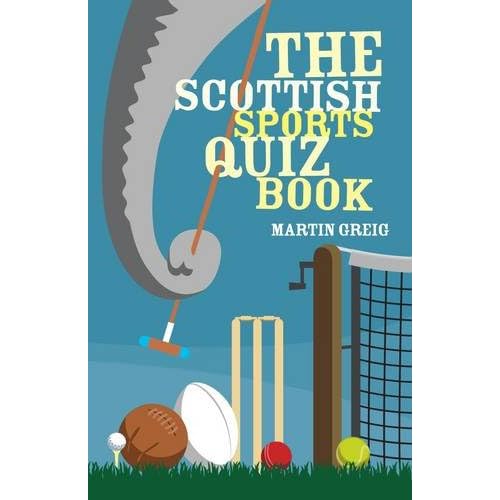
Book Review: The Scottish Sports Quiz Book

Finally get round to sorting out the piles of books littering the flat and promise not to add more until the turn of the year.

And the very next day a book arrives through the post.

Ah, well. And review copies don't really count because I'm not paying for them and they have a "proper" purpose*.

The latest is The Scottish Sports Quiz Book by Martin Greig. Really, when you're choosing a title for a book you're best just to come out and say exactly what it is.

A welcome title as well as I very occasionally moonlight as quiz master for a fairly irregular football/sports quiz.

The last one was held before the World Cup final and won by a man wearing a Spain strip. So in the football trivia field I'm kind of a cross between Bamber Gascoigne and Paul the psychic octopus. Obviously with less hair and fewer arms.

And I'm also a giant nerd who reads these things for fun so the promise of 3000 questions is almost as exciting as Christmas Eve.

Martin Greig is a former senior sports writer with The Herald so you'd expect him to know his stuff. Notice it is "Sports" not "Football" in that title. In fact the split is about 50:50 with the fitba' questions opening things up before mini-sections covering rugby, golf, boxing, swimming etc round everything off.

That's probably a more equitable split than you'll find from any of our broadcasters or newspapers so, for once, "sports" might just be a justified description.

The football categories are: Celtic, Rangers, Scottish National Team, Scottish Clubs in Europe, General Football Knowledge, Hearts and Hibs, North of the Tay and Junior Football. A smorgasbord of soccer to make any statto smile.

It might seem hard to muck something as simple a quiz book up. But somehow people manage it. Thankfully not Martin Greig.

Like anything of this nature there's nothing new here if you know the answers. But, unless you're in Bob Crampsey's league, you probably won't know all the answers and will enjoy spending an hour or two picking up some of the more interesting nuggets of trivia.

And don't worry, learning some interesting facts from The Scottish Sports Quiz Book won't turn you into the kind of pub bore that people move away from when they see them coming.

Of course I'm saying that from the corner of the pub that always seems to empty when I approach.

I actually spent large periods of my brief flirtation with the civil service doing football quizzes with a couple of like-minded co-skivers. It's high praise indeed to say that I'm confident our already poor productivity would have plummeted further had we The Scottish Sports Quiz Book to call on.

The Scottish Sports Quiz Book by Martin Greig. Published by Waverley Books. Available 5th August 2010.

*Which is to say if you're publishing a book on Scottish football please get in touch and I'll happily review it.

Saturday, July 24, 2010

Book Review: Pat Stanton's Hibernian Dream Team

Guest post by John Hislop.

The Day A Ref Tried To Send Off Alex Edwards For Singing

Since I have bought every book ever written about the Hibs, there was never any doubt that I would buy Pat Stanton's Hibernian Dream Team.

I have even bought the ones about players who only spent part of their career at Easter Road, like Chic Charnley, Peter Marinello and Keith Houchen, so, when I saw Pat’s advertised, I was hooked.

The fact that I got to meet the great man in WH Smith’s at the Gyle was an added bonus, and when I turned up for the book signing, to my delight, ‘Last Minute’ Lawrie Reilly was there as well.

As expected both Hibs legends were true gentlemen, and at least appeared to be interested in the ramblings of myself and fellow starstruck Hibs fans, as we queued up for their signatures.

The book was written by Ted Brack, a retired teacher and Hibs fanatic. Ted also wrote the excellent There Is a Bonny Fitba Team: 50 Years on the Hibee Highway which is well worth the reading if you get a chance.

I must admit, the majority of the Hibs books I have read over the years would probably not appeal to fans of other teams, but this one certainly would.

The foreword is by Sir Alex Ferguson who took Pat to Pittodrie as his number two. Had Pat not decided to try his hand at management, there is a fair chance could have been at Old Trafford today such is the respect that Fergie has for him.

The idea of Pat picking the best ever Hibs team might not seem to be a riveting subject, but it’s full of personal anecdotes of great and sometimes not so great players of the past.

One player whom Pat rated on a par with George Best and Jim Baxter was the late Willie Hamilton, who coincidentally shared the off field interests of the other two. As a youngster, Pat recalls asking Hamilton if he had any advice he could pass on, to which he replied thoughtfully; “Never take lime in your lager son and you won’t go far wrong."

Pat also recalls a referee telling him to have a word with Alex (Micky) Edwards during an Edinburgh derby, as he would have to send him off, if he didn’t stop singing! Apparently, Micky had spent the afternoon serenading a young Hearts full back with the Hibs version of Jingle Bells, which contains the line ‘Oh what fun it is to ‘beat’ the Hearts on New Year’s Day.’ Edwards may not have used the word ‘beat.’

The Hearts full back that day, who was ‘apoplectic’ with eyes bulging and veins throbbing, was none other than Jim Jefferies.

Pat devotes a chapter to each position and evaluates the strengths and weaknesses of many of the fans favourites, before coming up with a team that could compete against the best. He also selects the best manager, substitutes and even a chairman.

In goal he had the unenviable task of choosing between Andy Goram, Alan Rough, Jim Leighton and Zibby Malkowsky, and the other positions were equally difficult.

I won’t name Pat’s final selection, in case you want to read the book yourself, but when you consider that players like Stevie Archibald, Murdo McLeod, Erich Schaedler, Peter Cormack, Des Bremner Russell Latapy and Alan Gordon are not even on the bench, then you should realise the depth of talent who have worn the green and white jersey.

For the record I didn’t agree with several of his choices, but who am I to argue with the legend that is Pat Stanton?

A new signing for The Scottish Football Blog: a warm welcome to guest blogger John Hislop who some of you will be familiar with from Inside Left.

John currently works part time for The Southern Reporter as their Peebles Correspondent and previously had work experience with Hibs Interactive and has been published in the Daily Record, Edinburgh Evening News and North Edinburgh News.

Thursday, June 03, 2010

Book review: Martin O'Neill - The Biography

By Simon Moss (John Blake Publishing)


It's a tricky thing, writing an unauthorised biography. How do you pitch it? Do you go for the muckraking reportage of rumour and innuendo like Kitty Kelley or Albert Goldman? Or just use existing sources to build a portrait of the subject.

In Martin O'Neill: The Biography, Simon Moss takes the latter approach in a workman-like book that ultimately fails to satisfy.

Partly this is the fault of O'Neill himself. A complex, intense character he deserves more than a life illustrated by old cuttings.

Even here though you feel Moss could have done better. O'Neill's relationship with Brian Clough obviously shaped both his playing career and his subsequent attitude to the role of manager. Moss refers to it a lot but fails to properly examine it.

Similarly the way events in Northern Ireland affected O'Neill as a young Northern Irish Catholic living in England are alluded to but not really analysed. That might be excusable in a football book but they must have played some part in shaping O'Neill and certainly influenced his relationship with Neil Lennon when he joined him at Celtic.

And brevity is not always the author's friend. I feel that a sentence like "O'Neill...may have been immune to the troubles taking place in his homeland, but Forest had their own problems on the pitch" veers towards the offensive when the year in question is 1972.

So we are left with a chronological tour through O'Neill's career. And there's nothing wrong with that, especially for Celtic fans as the Parkhead period is given the lion's share of the book.

Personally I'd have like to hear more about the playing years. I know a little about that strained relationship with Clough but I was unaware, for example, that O'Neill scored for Irish club Distillery in the Nou Camp as a teenager.

Still, that's a minor quibble in a book that is clearly geared towards those interested in O'Neill the manager - an approach that might yet have Liverpool fans snapping it up in the weeks ahead.

Less easy to overlook are the errors that litter the pages. The Manchester United of one sentence become the Untied of the next. It becomes laughable when "former O'Neill charge Emily Heskey" gets what must surely have been a memorable equaliser. It is perhaps unfair to judge Moss' work on the failings of his editor - Lord knows this blog is not without errors - but when "Nemanja Vidi?" is making an appearance on the second last page this reader's patience was sorely tried.

An editor with a knowledge of Scottish football would probably have also realised that Celtic were unlikely to be playing "Livingstone" (Doctor, I presume). Similarly The Herald is suddenly transformed into Sydney's Morning Herald.

There are numerous examples of this: O'Neill is quoted as saying that John Clark told him the Celtic team of 1976 never got booed. Why Clark would pick a season five years after he left Celtic is unclear. Unless, of course, he was talking about 1967. A big mistake that as far as Celtic are concerned.

When, on page 213, "O'Nell was forced to blood nineteen-year-old David Youngster" in goals at the Nou Camp, these errors had me snorting my tea. Still, for a marshall, Youngster did very well.

And that's all a shame, because the book deserves better. It's not a classic, it's not the definitive O'Neill story, but it's a worthwhile look at a man who has been involved in senior British football for almost forty years.

It's certainly readable - I particularly enjoyed having my memory jogged about Celtic's run to the UEFA Cup final - and remains so despite some of the more glaring errors.

But you can't help picture O'Neill's demented leaping at so many missed opportunities if Moss was playing for one of his teams. In the end this book leaves you wanting more. For that we might have to wait for Martin O'Neill: The Autobiography.

If he can ever sit down long enough to write it.

You can buy Martin O'Neill: The Biography and loads of other stuff at The Scottish Football Bookshop. Mercy me, I need the cash.