Showing posts with label Blackburn. Show all posts
Showing posts with label Blackburn. Show all posts
Wednesday, February 02, 2011
El Hadji Diouf and Football's Bad Boys
Craig Burley reacts to Rangers' signing of El Hadji Diouf with a reasoned treatise on the power of forgiveness and moving soliloquy about avoiding the temptation to pre-judge people based on their past mistakes.
Well, no. He doesn't.
Rather Craig gets out his crampons and heads straight for the highest peak on the moral high ground. And suggests that Diouf should bally well head off to whatever bit of that foreign world abroad that he comes from.
Predictable for Burley, the unthinking man's pundit.
But is the reaction understandable?
Diouf has been a bad boy in the past. A bad boy many times over. Spitting at someone is disgusting. That Diouf has done it more than once is a pretty sad indictment of him as a person.
The allegations that he abused Jamie Mackie as the QPR player suffered a broken leg in a recent FA Cup clash are sickening and don't point to a reformed character.
Along the way there's been various motoring offences, accusations of racism and an international ban for abusing a referee.
Easy to look at that CV and think that we're dealing with a thoroughly nasty piece of work. And maybe we are.
So we can ask what Rangers are playing at having anything to do with him.
But are Rangers not simply exercising the pragmatism that the whole sport adopts when faced with a "bad 'un?"
Listening to some of the outrage that greeted his loan deal it would be easy to draw the conclusion that Diouf is the nastiest person to have ever been involved in the great Corinthian world of sport.
But football is full of bad boys, idiots and nasty pieces of work.
At least one current English Premier League star has been jailed for assault. Countless footballers past and present have been found guilty of drink driving. One of the greatest players of recent generations openly admitted to taking to the pitch with the intention of injuring an opponent.
Vinnie Jones became a celebrity on the back of "taking violence off the terracing and onto the pitch."
Andy Carroll, no stranger to controversy and with a conviction for common assault, became a £35 million striker on the same day that there were howls of anguish about Diouf coming to Rangers.
QPR manager Neil Warnock described Diouf as being lower than a sewer rat. Perhaps that's fitting when so many of our footballers seem to share the morals of those long tails with personal lives that would make Tommy Sheridan blush.
Possibly none of these offences are any more serious than Diouf's actions although I find it hard to see how many of them are less serious. Certainly I can't see how any of them are better role models for the generation of children that Diouf is accused of betraying.
And the game has not, as Craig Burley suggests it should with El Hadji Diouf, run these players from our shores.
If nothing else that suggests a double standard at play.
The idea that Diouf's behaviour is worse because it has happened on the pitch shows the staggeringly inflated sense of its own importance that is now football's curse.
But I honestly can't imagine Craig Burley being so worked up if Rangers had signed, say Patrick Kluivert, who was convicted of manslaughter for a driving offence that resulted in a death and had a litany of off-field incidents behind him. To me that's odd.
Perhaps there are fundamental sociological reasons why football throws up such incidences of bad behaviour.
But surely the truth is we are all implicit in condoning it. El Hadji Diouf has been employed by eight different clubs. Joey Barton earns £50,000 a week. We still go to the games, we still pay to watch them on TV.
Goals and decent performances give us the excuse, if not to forgive, then at least to forget indiscretions.
None of this is meant to defend Diouf. I find a lot of his behaviour reprehensible and fail to understand why Walter Smith would feel the need to take a risk on him.
But he's not the only bad boy to play the game. At times it seems the football is full of, at best, stupid boys and, at worse, a ragbag collection of bampots, cheats (in many senses of the word), thugs and convicted criminals.
If you look at Diouf and see an isolated example of football's moral breakdown, a lone wolf who fails to understand the boundaries of the norms of acceptable behaviour then you are taking an incredibly myopic view of the game. You are, might I suggest, taking a position of engineered outrage that a look at your own club's squad list might well fail to justify.
That, of course, is the football fan's prerogative. Vilification, condemnation, forgiveness and hero worship can be treated like a Woolworths' pick n mix.
El Hadji Diouf has provided people with the ammunition to cast him as the villain in a simple narrative of good versus evil.
He probably deserves that. But he's been picked from a cast of thousands for a starring role. If we're going to concentrate all our energies on screaming blue murder at Diouf's continued existence as a professional footballer then maybe we're letting a hell of a lot of others get off scot-free.
It's less hard to understand why Diouf seems to be constantly forgiven when we accept that he's not the only one. A bad apple for sure. But not the only one in this great game of ours.
The Scottish Football Blog News Feed


Wednesday, January 12, 2011
Kenny Dalglish Looks To Turn Back Time
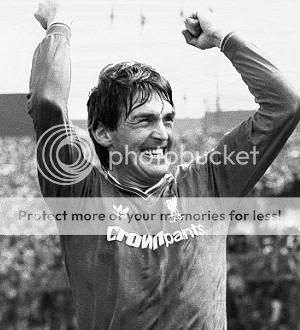
Football managers are different. They just keep going and going. Sir Alex Ferguson. Our very own Craig Brown.
And now, as he approaches his 60th birthday, Kenny Dalglish. The king is back, long live the king.
More than ten years since he left Celtic Park on the back of the John Barnes pantomime, for which he was at least partly responsible, Dalglish has been granted his wish and is back as Liverpool manager on an initially temporary basis until the end of the season.
He had wanted the job before Roy Hodgson was appointed. When that didn't happen the presence of Dalglish, as revered as any of the Kop's heroes, hung over the club. No matter how dignified and respectful Dalglish was in his ambassodorial role, just by being there he offered a rallying point for increasingly disgruntled Liverpool fans.
Some of those fans seem to think that Dalglish offers a quick fix, that his appointment will return immediate dividends. It would dangerous to put your faith in that.
Liverpool's problems did not begin when Hodgson became manager. Nor will they end now that he has left. If Dalglish's methods, even his legend, can stir a reaction in the squad then they can improve. But from what I've seen of Liverpool this season their failings are too deep to be healed by nothing more than motivation.
And if any club should realise the importance of steady, measured empire building it is Liverpool. Bill Shankly transformed the club. But European dominance wasn't delivered until after Shankly had retired. Their journey to pre-eminence in the 1970s and 1980s was about building a dynasty. No matter how messiah-like the new manager is depicted as being, he can't replicate that sort of success overnight.
Emotional attachments, past achievements and a nostalgic longing for him to do well aside, what can we say for Dalglish the manager? His achievements at Liverpool and at Blackburn are on record and remain as impressive as they ever were.
A good start at Newcastle drifted in his second season. Those Liverpool fans expecting their club to turn their back on Hodgson's defensiveness might have forgotten that the Newcastle fans came to deride Dalglish's negativity.
At Celtic he steadied a ship that John Barnes had left steaming for the rocks. A league cup win followed but there was little evidence that anyone at Celtic wanted to retain Dalglish's services when the season ended.
And let's not forget that Dalglish was in place to mentor and support Barnes. He failed in that role and, in prickly, facetious press conferences often conducted from a pub, he showed little desire or even aptitude for the day to day business involved in running a modern football club.
A modern football club. Crucial that. The Liverpool Dalglish led to three league titles was closer to the Liverpool of Shankly than to the English Premier League side of today. 20 years away from the club and ten years out of football is a long time. For all that we're assured he's still watched the game passionately, that is not preparation for running a club like Liverpool. Nor, for example, do we know how Dalglish the manager will react to working with a Director of Football - a role he himself never appeared particularly comfortable with.
So King Kenny is destined to failure, proof that you should never go back?
No. The appointment of Steve Clarke is a clever one and offers Dalglish Mark II a firmer foundation than earlier rumours of Ian Rush becoming assistant would have. And Liverpool still have quality players. Maybe not enough and maybe some of them are experiencing commitment issues, but they remain good footballers.
If anyone can unleash their potential surely it is Dalglish, a walking embodiment of both the glory days and the emotional pull of the club. His previous spell at Liverpool proved him to be a manager adept at knowing almost instinctively how to pick 11 players who could go out and do the jobs expected of them. Maybe the players will react to that more positively than they did to Hodgson's more lecturing style and system based methods.
The truth is none of us know how Dalglish will fare. I don't know, the Liverpool fans don't know, the ex-Liverpool players lauding his appointment don't know and the press don't know. Maybe he himself doesn’t know.
Some managers click at certain clubs and some don't. Dalglish has worked his magic at Liverpool before. It's a very different club now but he might well repeat the trick.
I'm finding it hard to get over my initial scepticism though. We don't like to see our heroes fail. Dalglish is maybe the greatest Scottish football hero of them all, blessed with more ability in just his backside than most of us could dream of. And there is a chance that he's about to fail.
And surely Liverpool's owners, New England Sports Ventures, realise is this is the simplest move they could make to establish their power at the club.
For as long as he remained on the peripherary, active but not fully involved Dalglish offered the fans a figurehead to acclaim as they aired their grievances.
That's now changed. If he succeeds then the new owners can bask in his reflected glory and acclaim themselves as visionaries for going back to the future. If he fails they can jettison him in the summer and free themselves of his influence, however benign he himself saw that influence as being. The past will be shown to have failed and the owners will be free to dictate their own future.
I wish him luck and I'll be watching with interest. But my misgivings remain.
Liverpool play Blackpool tonight.
A Dalglish Anecdote
Some years ago a retired Dalglish played for Hibs in a testimonial at Easter Road (I think for Alan Sneddon against Aston Villa) and made a cameo man-of-the-match appearance. Before driving home Dalglish was asked if there was anything he wanted. There was. A fish supper and a can of cream soda. The groundsman of the time was dispatched to the chippy to pick it up. Dalglish left a happy man. Old school.Wicked Webb
I only saw about the last ten minutes of Manchester United v Liverpool. And I haven't seen either the penalty or red card decisions. I've enjoyed the discussions over the past few days though. I don't actually believe Howard Webb is biased towards Manchester United through any skullduggery. Rather I think he is suspect in his handling of big games, swayed by both the crowd and how his decisions will be played in the media. That makes his career trajectory odd. What I've really been enjoying is the lists of Webb's failings produced by Liverpool fans, dossiers of evidence you might say. Bad refeereeing and the conspiracy theories that go with it recognise no borders.The Scottish Football Blog News Feed
Tuesday, April 20, 2010
Brave new world
So I was reading The Guardian's Liberty Central blog yesterday - this blog's wishy-washy, lefty liberal credentials are so right on it's hard to believe I grew up the tough way on the mean streets of, eh, a leafy East Lothian commuter town - when I came across this:
I don't know the rights and wrongs of this, who was to blame, who instigated it. The video does look like certain policemen are at least on the brink of losing control, although it's impossible to know what went before.
It's a reminder though that the global shininess of English football's brand continues to hide some ugliness.
And it's a warning to everyone involved with football that we can't be too complacent if we want to avoid a return to the dark old days.
If, and it is a big if, the police were to blame then it has to be addressed as it will simply increase tensions and make games more difficult to police. If, and again I stress if, it was fans that caused all the problems then action has to be taken against them and the club.
This is the video:
Three weeks ago, the east Lancashire derby between Burnley and Blackburn Rovers took place in normally tense conditions, in which fans from both sides were isolated before and after the fixture at Burnley's ground, Turf Moor. Trouble after the match was reported in the media with Superintendant Terry Woods, of Lancashire police, issuing a standard statement about a few troublemakers. "Unfortunately we have had to deal with some disorder inside and outside the ground," he said. "However, the operation that is in place has enabled us to successfully deal with those pockets of disorder rapidly."As far as I can tell it was only really picked up in match reports, mainly in an "unforgivable crowd trouble" kind of tone, and was pretty much ignored elsewhere.
Yesterday, the Police State website publicised a video that shows shocking levels of violence by the police and which certainly puts a different slant on what actually happened after the game. Officers are seen wading into the crowd with batons flailing. It is only a 40-second video, but the fans did not appear to be presenting a violent threat.
I don't know the rights and wrongs of this, who was to blame, who instigated it. The video does look like certain policemen are at least on the brink of losing control, although it's impossible to know what went before.
It's a reminder though that the global shininess of English football's brand continues to hide some ugliness.
And it's a warning to everyone involved with football that we can't be too complacent if we want to avoid a return to the dark old days.
If, and it is a big if, the police were to blame then it has to be addressed as it will simply increase tensions and make games more difficult to police. If, and again I stress if, it was fans that caused all the problems then action has to be taken against them and the club.
This is the video:
Subscribe to:
Posts (Atom)