Snippets from a day's football news.
In England, semi-professional footballer Daniel Ailey calls the treatment of his deafness "the same as racism."
In Italy, Inter Milan are fined €50,000 after their fans directed racist chants at Mario Balotelli. Balotelli was himself fined €10,000 for gesturing to those same fans.
Elsewhere column inches are still being devoted to Robbie Rogers, the gay footballer who came out and then retired from the game.
Football, the people's game, remains as confused as ever about embracing all of the people.
Meanwhile in Scotland Gordon Parks took to the pages of the Daily Record to rage against the monstrous regiment.
Too much money is going to women and girls who want to play football and it's all because of the politically correct brigade and these daft modern ideas about equality, snarled sexism's unabashed proselytiser.
(Like a retired major from Tunbridge Wells who's cut loose on the G&Ts before heckling Shami Chakrabarti on Question Time, he did actually use the phrase "politically correct brigade.")
It's tempting but churlish to say that even in our discrimination Scottish football lags a decade or so behind more enlightened nations.
Gordon's war on equality might not stretch to people with disabilities, people with different skin colours or people with different sexual preferences. I don't know.
Chivalrously he only targets women. It would be nothing more than speculation to suggest that if you're against opening the game up to one section of society, you're hardly likely to take to the streets and rip down the barriers that football still throws in the way of any of the other sections of society that it sees fit to ignore or exclude.
£1.2 million, argues Gordon, spent by the SFA "and its partners" on women's football is a spectacular waste of money.
A theft actually. Daylight robbery of funds that would be better spent on grassroots football. Grassroots football for boys.
The consequences are plain for all to see. Letting women out of the kitchen and onto the pitch means Scotland will not play in a major men's finals again.
Stone me! So simple.
Never mind that, while £1.2 million would hardly wipe the nose of a mediocre SPL squad, it doesn't leave women's football in Scotland awash with cash.
Nor would £1.2 million put right the wrongs of an approach to the grassroots that has been cackhanded and blighted by short termism for too long.
What that £1.2 million can do, however, is build an ecosystem that attracts more diverse sections of our communities to the game.
It can encourage girls to play the game, build a love for the game that too many people are losing, it can support a senior women's game that can begin to make strides in catching up with countries that have already thrown off the shackles of sexism.
It can create role models that inspire more of our youngsters to get off their arses and do something as simple as chase a ball about a strip of land.
It can help make football a more attractive place for more people. It can help more people share in the fun and frustrations of the game. And it can create some decent players into the bargain.
£1.2 million is nowhere near enough.
We're in danger of becoming a nation that only takes sport seriously when we can moan about how bad a select group of grown men are at playing football.
The future has to lie in widening the audience for the game, putting clubs at the heart of their communities. Football for all.
"A ladies’ version of a game played in men’s shorts," moaned Gordon, choosing not to elaborate on what "men's games" are actually taking place in his own shorts.
Gordon Parks is clearly a dafty.
But we can't hide from the fact that sexism still exists in the game.
The same game where this weekend there was a very public return to chants about religion, where songs about this player or that player being gay roll from the terraces, where racism isn't yet dead, where sex crimes become a cause for gloating, where fans can take a death and turn it into a ditty to attack another team.
I don't know if I get a commission in the politically correct brigade for finding that wrong.
I do know that spouting sexist nonsense on the pages of a national paper makes you a whopping great part of the problem.
The only footballing World Cup winner in the Scottish Sports Hall of Fame is a woman.
Rose Reilly had to leave Scotland to achieve that. Gordon Parks - if he's ever heard of her - probably thinks that's exactly what she deserved.
Let's hope he increasingly finds himself in the minority.
Tuesday, February 26, 2013


Sunday, February 24, 2013
The Oscar goes to Tannadice
Scottish football's great cinematic triumph?
Perhaps not Ally McCoist's turn in A Shot at Glory, the underwhelming dénouement of Robert Duvall's odd fitba' flirtation.
What of John Wark's monosyllabic scene stealing in Escape to Victory?
 Or the sainted Gordon Smith's experience of being an extra as Hitchcock directed Grace Kelly in To Catch a Thief?
Maybe not. Better, perhaps, to travel back to 1930s Dundee.
Then, as now, a two team town. But in the 1930s Dundee United toiled in the Second Division and in the shadow of their city rivals.
In 1936-37 Dundee finished ninth in the First Division while United were a rather listless 14th in the second tier.
So far, so unremarkable. But even in the interwar years it was unheard of for clubs to be led by an amateur.
A player's vote, however, had decided that United's captain for the season would be a 21 year old amateur from Greenock who had studied law at the University of Edinburgh.
Neil Paterson played 25 games that season, his nine goals including a hat trick. But, perhaps like Willo Flood after him, here was a United player with a hinterland to explore.
The first amateur to captain a professional club in Britain, Paterson decided the pen was mightier than the football boot and left Tannadice to take a job with DC Thomson.
War service intervened but by 1947 he was an award winning writer and his 1948 fictional biography The China Run was anointed "book of the year" by Somerset Maugham in the New York Times.
1950's Behold Thy Daughter became an international best seller and grabbed another "book of the year" nod, this time from the Evening Standard.
The Kidnappers, an adaptation of a Paterson short story, tasted Oscars success in 1953 and his "taut and tense" writing - "the "the best story-teller Scotland has produced since Stevenson" - seemed a perfect fit for the cinema.
And it was as a screenwriter that he became the first and, with the future career of David Goodwillie still undecided, so far the only former Dundee United player to win an Oscar.
1960 was the year of Ben-Hur. A film so long that many Academy members agreed to vote for it simply to make good their escape from the picture house as Charlton Heston led the charge to an unprecedented 11 Oscars.
But not 12.
Neil Paterson stood firm between the rise of Christianity and a glorious dozen.
His adaption of John Braine's Room at the Top snatched the Best Adapted Screenplay award, beating both Ben-Hur's Karl Tunberg and Billy Wilder for Some Like it Hot.
It also spearheaded the growth of British New Wave cinema, bringing a different Britain to cinema screens.
Realistic, gritty, uncompromising, often harsh. It might not have been far removed from a 1930s Second Division game at Tannadice.
Paterson himself didn't move far, eschewing Hollywood for Perthshire where he retired to golf and serving the Scottish arts community.
A Scottish Oscar winner is rare. An Oscar winning amateur captain of Dundee United will be forever unique.
Neil Paterson died in 1995, sadly too early to avenge Dundee's dominance of the 1930s by giving a cinematic sweep to their managerial farce of the last few days.
Sources
Perhaps not Ally McCoist's turn in A Shot at Glory, the underwhelming dénouement of Robert Duvall's odd fitba' flirtation.
What of John Wark's monosyllabic scene stealing in Escape to Victory?

Maybe not. Better, perhaps, to travel back to 1930s Dundee.
Then, as now, a two team town. But in the 1930s Dundee United toiled in the Second Division and in the shadow of their city rivals.
In 1936-37 Dundee finished ninth in the First Division while United were a rather listless 14th in the second tier.
So far, so unremarkable. But even in the interwar years it was unheard of for clubs to be led by an amateur.
A player's vote, however, had decided that United's captain for the season would be a 21 year old amateur from Greenock who had studied law at the University of Edinburgh.
Neil Paterson played 25 games that season, his nine goals including a hat trick. But, perhaps like Willo Flood after him, here was a United player with a hinterland to explore.
The first amateur to captain a professional club in Britain, Paterson decided the pen was mightier than the football boot and left Tannadice to take a job with DC Thomson.
War service intervened but by 1947 he was an award winning writer and his 1948 fictional biography The China Run was anointed "book of the year" by Somerset Maugham in the New York Times.
1950's Behold Thy Daughter became an international best seller and grabbed another "book of the year" nod, this time from the Evening Standard.
The Kidnappers, an adaptation of a Paterson short story, tasted Oscars success in 1953 and his "taut and tense" writing - "the "the best story-teller Scotland has produced since Stevenson" - seemed a perfect fit for the cinema.
And it was as a screenwriter that he became the first and, with the future career of David Goodwillie still undecided, so far the only former Dundee United player to win an Oscar.
1960 was the year of Ben-Hur. A film so long that many Academy members agreed to vote for it simply to make good their escape from the picture house as Charlton Heston led the charge to an unprecedented 11 Oscars.
But not 12.
Neil Paterson stood firm between the rise of Christianity and a glorious dozen.
His adaption of John Braine's Room at the Top snatched the Best Adapted Screenplay award, beating both Ben-Hur's Karl Tunberg and Billy Wilder for Some Like it Hot.
It also spearheaded the growth of British New Wave cinema, bringing a different Britain to cinema screens.
Realistic, gritty, uncompromising, often harsh. It might not have been far removed from a 1930s Second Division game at Tannadice.
Paterson himself didn't move far, eschewing Hollywood for Perthshire where he retired to golf and serving the Scottish arts community.
A Scottish Oscar winner is rare. An Oscar winning amateur captain of Dundee United will be forever unique.
Neil Paterson died in 1995, sadly too early to avenge Dundee's dominance of the 1930s by giving a cinematic sweep to their managerial farce of the last few days.
Sources
- I was completely unaware of Paterson's singular achievements until I read Brian Ferguson's tale of Scotland at the Oscars in this week's Scotsman
- The Independent
- The Daily Record
- The Herald
Friday, February 15, 2013
SPL: Stuttering Hibs
Fifth in the league, a point better off after 26 games of this season than they were after the SPL had run it's course last season.
Hibs fans, punch drunk from their annus horribilis, heard promises in the summer of a rebuilt side capable of making progress.
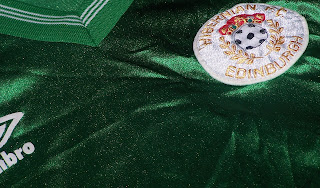 A top six berth after two-thirds of the season does indeed point to progress. But statistics, as students of the number crunching Craig Brown know only too well, can hide a multitude of sins.
Hibs have clung grimly to their league position despite a run of just seven points in ten games.
They slipped from fourth following Monday's meek capitulation to St Johnstone at Easter Road. It's not impossible that the SPL's unpredictable middle ten could throw up a combination of results that condemn them to ninth place by the middle of next week.
Fans could be forgiven for not travelling to tomorrow's match with St Mirren - whose last seven points have been garnered from just three games - with songs of joy in their hearts.
Hibs (2.8 at https://sports.bwin.com/en/sports/4/betting/football) remain five points ahead of their opponents - in the SPL's flabby midrift they are separated by five teams - but St Mirren (2.3) just edge ahead as favourites.
Home advantage counts. But so to must the laboured way Hibs have gone about their business of late.
After shipping three goals in successive games against Inverness and Motherwell in December, Pat Fenlon did successfully stop the flow of goals.
Just four were conceded in the next eight games. Unfortunately only four were scored.
The impression was of a team that couldn't confidently attack if they were to remain competent in defence. On Monday they could do neither and St Johnstone filled their boots.
Leigh Griffiths has too often been isolated up front, sometimes alone and sometimes partnered with the willing but profligate Eoin Doyle.
The younger alternatives in attack seem to have been deemed too raw to start. The moribund Shefki Kuqi's experience is rendered impotent by immobility.
The midfield often looks too flat footed to help out, David Wotherspoon's early season rejuvenation replaced by a hesitant anonymity while others are happy to graft but unwilling, unable or simply not encouraged to play a meaningful offensive role.
Where Paul Cairney offered sparks of creativity into the autumn, he's now slipping to the periphery, a tendency to embonpoint looking more like a problematic heavy arsedness on deteriorating pitches.
Ben Williams impresses in goal behind a defence that often sits too deep, especially on those occasions - and there have been a few of late - when James McPake is preoccupied by finding his own form. Tim Clancy's ongoing injury problems necessitate a starting back four that is susceptible to individual errors.
Yet Fenlon can rightly point to progress at the back. 34 goals conceded in 26 games compares favourably with the 50 conceded at the same stage last year. A goal difference of -1 is nothing to write home about but it knocks last season's -26 into a cocked hat.
So is this wintry malaise a blip and nothing more?
This supporter hopes so.
Scott Robertson and Matt Done arrived in January to provide more incisive options in midfield. Both started on Monday. Both will hope to quickly make amends.
The feeling persists, however, that the transfer window was not used to address gaps in the squad. Too often of late Fenlon's changes look like so much fiddling while Easter Road gurns.
Let us be sanguine and say that in the travails of recent years enduring a mid season blip while remaining in the top half of the table with a Scottish Cup quarter final to come would have been considered a position of some luxury.
But my reading of the mood suggests patience is becoming frayed.
Taking the same number of points in two games against Celtic as they have from three against an adrift Dundee suggests Fenlon hasn't cracked what we might romantically call the Hibs enigma or more prosaically label the destructive inconsistency of the club.
To hear a manager say he's "embarrassed" by a performance 26 games into a season, a performance indicative of "the last few weeks [when] we haven't shown the desire to win football matches" is about as depressing as spending Valentine's Day writing about the travails of your team.
The potential remains for this season to be one of positive progress.
But Fenlon needs to find a higher gear soon to avoid yet another year of broken promises. He could do worse than start in Paisley this weekend.
St Mirren v Hibs prediction: If I must, based on the perhaps forlorn hope that a reaction to Monday night should be inevitable, Hibs to win 2-1 (10.5.)
Hibs fans, punch drunk from their annus horribilis, heard promises in the summer of a rebuilt side capable of making progress.

Hibs have clung grimly to their league position despite a run of just seven points in ten games.
They slipped from fourth following Monday's meek capitulation to St Johnstone at Easter Road. It's not impossible that the SPL's unpredictable middle ten could throw up a combination of results that condemn them to ninth place by the middle of next week.
Fans could be forgiven for not travelling to tomorrow's match with St Mirren - whose last seven points have been garnered from just three games - with songs of joy in their hearts.
Hibs (2.8 at https://sports.bwin.com/en/sports/4/betting/football) remain five points ahead of their opponents - in the SPL's flabby midrift they are separated by five teams - but St Mirren (2.3) just edge ahead as favourites.
Home advantage counts. But so to must the laboured way Hibs have gone about their business of late.
After shipping three goals in successive games against Inverness and Motherwell in December, Pat Fenlon did successfully stop the flow of goals.
Just four were conceded in the next eight games. Unfortunately only four were scored.
The impression was of a team that couldn't confidently attack if they were to remain competent in defence. On Monday they could do neither and St Johnstone filled their boots.
Leigh Griffiths has too often been isolated up front, sometimes alone and sometimes partnered with the willing but profligate Eoin Doyle.
The younger alternatives in attack seem to have been deemed too raw to start. The moribund Shefki Kuqi's experience is rendered impotent by immobility.
The midfield often looks too flat footed to help out, David Wotherspoon's early season rejuvenation replaced by a hesitant anonymity while others are happy to graft but unwilling, unable or simply not encouraged to play a meaningful offensive role.
Where Paul Cairney offered sparks of creativity into the autumn, he's now slipping to the periphery, a tendency to embonpoint looking more like a problematic heavy arsedness on deteriorating pitches.
Ben Williams impresses in goal behind a defence that often sits too deep, especially on those occasions - and there have been a few of late - when James McPake is preoccupied by finding his own form. Tim Clancy's ongoing injury problems necessitate a starting back four that is susceptible to individual errors.
Yet Fenlon can rightly point to progress at the back. 34 goals conceded in 26 games compares favourably with the 50 conceded at the same stage last year. A goal difference of -1 is nothing to write home about but it knocks last season's -26 into a cocked hat.
So is this wintry malaise a blip and nothing more?
This supporter hopes so.
Scott Robertson and Matt Done arrived in January to provide more incisive options in midfield. Both started on Monday. Both will hope to quickly make amends.
The feeling persists, however, that the transfer window was not used to address gaps in the squad. Too often of late Fenlon's changes look like so much fiddling while Easter Road gurns.
Let us be sanguine and say that in the travails of recent years enduring a mid season blip while remaining in the top half of the table with a Scottish Cup quarter final to come would have been considered a position of some luxury.
But my reading of the mood suggests patience is becoming frayed.
Taking the same number of points in two games against Celtic as they have from three against an adrift Dundee suggests Fenlon hasn't cracked what we might romantically call the Hibs enigma or more prosaically label the destructive inconsistency of the club.
To hear a manager say he's "embarrassed" by a performance 26 games into a season, a performance indicative of "the last few weeks [when] we haven't shown the desire to win football matches" is about as depressing as spending Valentine's Day writing about the travails of your team.
The potential remains for this season to be one of positive progress.
But Fenlon needs to find a higher gear soon to avoid yet another year of broken promises. He could do worse than start in Paisley this weekend.
St Mirren v Hibs prediction: If I must, based on the perhaps forlorn hope that a reaction to Monday night should be inevitable, Hibs to win 2-1 (10.5.)
Thursday, January 17, 2013
Fun in Funchal
Madeira in January.
 Sunshine, spectacular scenery, cheap beer, good food and British pensioners of every shape, size and accent swarming like a plague of mildly arthritic locusts, more plastic joints than bling crowding round the casino tables.
Football too. The island's 273,000 residents can boast of two teams in Portugal's top flight, both based in the main city of Funchal. The trip away teams must negotiate from the mainland would surely leave Danny Lennon apoplectic.
Extensive research - Wikipedia detained me for all of five minutes - suggests that Maritimo have often enjoyed the island upper hand and a degree of populist political patronage while Nacional have traditionally attracted support from Funchal's more well to do citizens.
Loathe as I am to forget a childhood spent on the mean, if lovingly manicured, streets of commuter belt East Lothian, a quirk of the fixture list meant it would be the toffs of Nacional graced with my patronage.
With both teams having endured financial challenges in recent years it could be that their respective support is now less divided by class or wealth.
Nacional though have preserved the air of the haughty aristoratic thanks to their stadium, modern and modest but perched high in the hills overlooking Funchal.
The Cristiano Ronaldo Academy - he was a Nacional player before Sporting Lisbon swooped when he was just ten years old - adds glamour in the mountains, the perfect spot for looking down on the masses as they look up to you.
Modern out of town stadiums often seem designed to depress. The Estádio da Madeira - a name that might well irk Maritimo - at least offers a bar and a bolo do caco stall churning out freshly made doughy bread with garlic butter and chorizo for all of €2.
(Not only is this an improvement on the "street food" of Scottish football it's also well worth seeking out in down town Funchal where most restaurants pitched at tourists think lunch should be a three course affair beginning with soup. Whether this is dictated by tradition or the dental capabilities of much of their winter clientele is unclear.)
A rather sparse club shop hints at a certain difficulty in parting the locals from their cash. Maybe not just locals, a pile of "half and half" scarves marking a European game with Birmingham a couple of years ago suggests either overly ambitious ordering or reluctant Brummies preferring to leave their money behind the bar.
Most dramatically the stadium escapes humdrum modernity thanks to its location. Windows in the newer of the two stands offer views across Funchal and give the feeling of a modern stadium that is at once apart from and a part of its city.
There was also a match to be played. Nacional, at the wrong end of the table, entertaining Braga, three wins on the trot and lying third behind Porto and Benfica.
Politeness might always have led me to root for the home team but a run in with Braga's team bus, displaying what I considered some reckless reversing in a crowded car park, the day before the game sealed the deal.
Which is why at half time I found myself sitting in a stadium that was two thirds empty, having watched "my side" look enthusiastically uninspired as visitors doing no more than go through the motions had taken a 1-0 lead.
I can cross the road to see that most weeks in Scotland.
A couple of non-alcoholic beers (€1 and pointless) and a couple of gut wrenchingly strong coffees (€0.70 and invigorating) later and I was ready for more.
And so were Nacional. Finding more point to their energy they began to threaten as Braga went from not really trying to really quite narked that things weren't going their way.
1-1 on 58 minutes, 2-1 on 60 minutes. Having broken with no real purpose to squander decent opportunities in the first half Nacional were now breaking with real purpose to make the most of half chances.
78 minutes and it was 3-1, an own goal giving the home side a cushion.
Braga rallied. In the 83rd minute Eder pulled one back, his third in three games and ninth in eleven league games since joining in the summer. The goal was a product of an urgency that hadn't been there as they went 1-0 up or even when they found themselves 2-1 down.
It might actually have taken 75 minutes before their captain, Alan, managed to find it in himself to lift the pace above holiday dawdle.
Too late though. And definitely too late when Hugo Viana got himself sent off with five minutes to go.
Nacional closed it out. Braga missed the chance to gain on the top two, Nacional moved up the league and sneaked past Maritimo on goal difference.
The taxi driver who took us up the mountain was waiting at full time to take us back down.
We were back in the centre of Funchal to catch the hotel crooner finishing off his set with a rousing My Way. Walking sticks were tapped on the dancefloor in approval, the walking dead shuffled riotously towards a live casino dreaming dreams of Euro riches.
There are, I think, worse ways to watch football.

Football too. The island's 273,000 residents can boast of two teams in Portugal's top flight, both based in the main city of Funchal. The trip away teams must negotiate from the mainland would surely leave Danny Lennon apoplectic.
Extensive research - Wikipedia detained me for all of five minutes - suggests that Maritimo have often enjoyed the island upper hand and a degree of populist political patronage while Nacional have traditionally attracted support from Funchal's more well to do citizens.
Loathe as I am to forget a childhood spent on the mean, if lovingly manicured, streets of commuter belt East Lothian, a quirk of the fixture list meant it would be the toffs of Nacional graced with my patronage.
With both teams having endured financial challenges in recent years it could be that their respective support is now less divided by class or wealth.
Nacional though have preserved the air of the haughty aristoratic thanks to their stadium, modern and modest but perched high in the hills overlooking Funchal.
The Cristiano Ronaldo Academy - he was a Nacional player before Sporting Lisbon swooped when he was just ten years old - adds glamour in the mountains, the perfect spot for looking down on the masses as they look up to you.
Modern out of town stadiums often seem designed to depress. The Estádio da Madeira - a name that might well irk Maritimo - at least offers a bar and a bolo do caco stall churning out freshly made doughy bread with garlic butter and chorizo for all of €2.
(Not only is this an improvement on the "street food" of Scottish football it's also well worth seeking out in down town Funchal where most restaurants pitched at tourists think lunch should be a three course affair beginning with soup. Whether this is dictated by tradition or the dental capabilities of much of their winter clientele is unclear.)
A rather sparse club shop hints at a certain difficulty in parting the locals from their cash. Maybe not just locals, a pile of "half and half" scarves marking a European game with Birmingham a couple of years ago suggests either overly ambitious ordering or reluctant Brummies preferring to leave their money behind the bar.
Most dramatically the stadium escapes humdrum modernity thanks to its location. Windows in the newer of the two stands offer views across Funchal and give the feeling of a modern stadium that is at once apart from and a part of its city.
There was also a match to be played. Nacional, at the wrong end of the table, entertaining Braga, three wins on the trot and lying third behind Porto and Benfica.
Politeness might always have led me to root for the home team but a run in with Braga's team bus, displaying what I considered some reckless reversing in a crowded car park, the day before the game sealed the deal.
Which is why at half time I found myself sitting in a stadium that was two thirds empty, having watched "my side" look enthusiastically uninspired as visitors doing no more than go through the motions had taken a 1-0 lead.
I can cross the road to see that most weeks in Scotland.
A couple of non-alcoholic beers (€1 and pointless) and a couple of gut wrenchingly strong coffees (€0.70 and invigorating) later and I was ready for more.
And so were Nacional. Finding more point to their energy they began to threaten as Braga went from not really trying to really quite narked that things weren't going their way.
1-1 on 58 minutes, 2-1 on 60 minutes. Having broken with no real purpose to squander decent opportunities in the first half Nacional were now breaking with real purpose to make the most of half chances.
78 minutes and it was 3-1, an own goal giving the home side a cushion.
Braga rallied. In the 83rd minute Eder pulled one back, his third in three games and ninth in eleven league games since joining in the summer. The goal was a product of an urgency that hadn't been there as they went 1-0 up or even when they found themselves 2-1 down.
It might actually have taken 75 minutes before their captain, Alan, managed to find it in himself to lift the pace above holiday dawdle.
Too late though. And definitely too late when Hugo Viana got himself sent off with five minutes to go.
Nacional closed it out. Braga missed the chance to gain on the top two, Nacional moved up the league and sneaked past Maritimo on goal difference.
The taxi driver who took us up the mountain was waiting at full time to take us back down.
We were back in the centre of Funchal to catch the hotel crooner finishing off his set with a rousing My Way. Walking sticks were tapped on the dancefloor in approval, the walking dead shuffled riotously towards a live casino dreaming dreams of Euro riches.
There are, I think, worse ways to watch football.
Tuesday, January 15, 2013
Scottish football: Reinventing the wheel
12 + 12 + 18 = 8 + 8 + 8 + 18 = 36 + 36 + 36 + 34.
With such simple equations are Scottish football resurrections secured.
If the SPL is about to die, the dictators of the ancien regime are going to get their way before the peasants storm the castle.
12 + 12 + 18.
We could carve it in granite on the SPL's tombstone if an unmarked grave didn't seem more appropriate.
The SPL's Neil Doncaster has often been characterised on this blog as providing much of the deficit in Scottish football's leadership.
His stock fell further during the bloodletting of the summer and recently it has been his Scottish Football League counterpart, David Longmuir, who has been seen by many to better articulate the views of the ordinary punter.
Longmuir has been gazumped on the critical issue of reconstruction though. Step aside Donkey-caster, this was Don King-caster, persuading enough clubs that his dream was actually their dream too.
In the time honoured Scottish football tradition this was done with sticks and carrots, bribes and threats. Our change or no change and did we mention a redistribution of wealth? Our way or the highway and how about increasing the number of potential promotion spots?
In such ways can dreams be sold.
Fair to say that many fans have been less enamoured to the SPL's grand compromise. Never convinced by the split in the first place, supporters are unlikely to find appeasement in a further level of splittage.
This apparent disregard for the paying punter might be nothing more than some club chairmen judging that their support has been reduced to a loyal rump who will remain forlornly in attendance whatever the divisional machinations.
Or it could be that they can't quite escape playing matron. They know we don't like the idea of a three way split cabbage but it will help us grow strong and healthy so they'll force feed us it anyway.
The guardians of the game guarding the game against the romantically suicidal notions of supporters.
It's not unreasonable for directors to think that is simply a case of them doing their jobs.
Risky though. A wild stab in the demographic dark would lead me to surmise that few Scottish football fans grew up with Listen With Mother or accepting that nanny knew best.
In difficult times we might decide that paying for the privilege of eating cabbage is a miserable luxury we can forego or that the time has come to find a restaurant where the menu is more entertaining and less cabbage centric.
(And while I am throttling this cabbage nonsense to death, full disclosure: I am a fan of the Cabbage who will likely perservere with that support no matter the method of shredding the leaves in mid season. Part, as it were, of Rod Petrie's cabbagey rump.)
If clubs are prepared to gamble that 12 + 12 + 18 minimises destruction in the court of public opinion, do they have the same confidence in the corportate world?
However the cards fall on reconstruction, the model will require a title sponsor and media partners will need to be satisfied they are getting value for their investment.
Last week there were rumours that ESPN were either looking at ditching their Scottish football coverage or ditching all their remaining assets and pulling out of the UK market.
Would Sky want a monopoly? Could BT's new kid on the televised sport block be persuaded to intervene?
Has anyone even asked them?
Part of the problem with the SPL's vision is what remains unsaid.
On sponsorship and TV deals. On how a fairer distribution of money would work. On how the leagues below the SFL will be persuaded that this is a pyramid system that can actually work for them. On what exactly increasing access to promotion will mean in practice. On how willing the SPL will be to give up their rotten borough of a voting system within a single league body.
We don't know enough. Is it any surprise that fans are taking a lot of convincing when the known knowns seem so needlessly complicated and the known unknowns seem so plentiful?
Rangers have offered a counter proposal a 14 + 14 + 14 structure. That 14 team top flight was the model favoured by Rangers and Celtic a couple of years ago. It was also the model, probably quite coincidentally, outlined by Jim Traynor in 2011.
It has merits. It has flaws. Given how steadfastly a majority of SPL clubs have been in their desire to do anything but expand the top flight it seems unlikely, as Charles Green is no doubt aware, to find favour. Having kicked up a fuss about 12 + 12 + 18 and been challenged to deliver an alternative, Green was perhaps lucky to have Jim Traynor's back catalogue lying around Ibrox.
And clearly there are already SFL clubs persuaded by the 12 team second tier, that SPL2 by any other name.
Are we closer to reconstruction in time for next season?
I'd think so. But for it to happen in the next few months it will be along the 12 + 12 + 18 model.
That is the model that preserves the number of home gates the SPL clubs need to sustain their often hand to mouth existence, the model that gives clubs in the current First Division that tantalising prospect of access to the top flight and the model that seems to have found a degree of acceptance among the remaining SFL clubs.
If it's not agreed, we will be back to various brains trusts banging together in the corridors of Hampden. Again.
It's far from perfect.
It's already been branded a failure in Austria and the Swiss - who successfully sold the world cuckoo clocks, multi functional penknives with little apparent functionality and Sepp Blatter - couldn't make it work.
Fans are resistant and it seems quite an emotional resistance, one not easily countered by bland marketing and "here's the maths" spreadsheets.
That's a hard sell for an imperfect product.
Maybe honesty would be best the option:
"We want 12 + 12 + 18 for reasons of self-preservation. We're not sure the football will improve, the games will be more exciting or the blot of meaningless game will be forever erased from the top two divisions.
"But we're all skint and this is the best way we can find to try and maximise revenues, the best way to keep the greatest number of clubs alive.
"Perfect? No. A quick fix? Probably not. But if you've been watching Scottish football through the years you'll know that the problems are too deep for a change in the size of the top flight to make the game an overnight success.
"We're taking a risk that 12 + 12 + 18 will give us the stability to build something a bit better. We kind of need your help to do it."
It might not persuade a lot of fans but it could prove quite cathartic for all involved.
It might also help to rebuild trust between clubs and fans, a trust that has been eroding for too long, making it trickier to sell any reconstruction idea to the majority.
That this reconstruction has been framed as the last act of a collapsing SPL hasn’t helped - people are less keen to grant your last wish if you’ve been universally derided for most of your life.
If pushing ahead with 12 + 12 + 18 erodes that trust further, fails to improve what we see on the pitch, leaves yet more fans choking on their cabbage then we'll be chasing down yet another dead end.
And with every passing season we're getting less and less room for manoeuvre.
With such simple equations are Scottish football resurrections secured.
If the SPL is about to die, the dictators of the ancien regime are going to get their way before the peasants storm the castle.
12 + 12 + 18.
We could carve it in granite on the SPL's tombstone if an unmarked grave didn't seem more appropriate.
The SPL's Neil Doncaster has often been characterised on this blog as providing much of the deficit in Scottish football's leadership.
His stock fell further during the bloodletting of the summer and recently it has been his Scottish Football League counterpart, David Longmuir, who has been seen by many to better articulate the views of the ordinary punter.
Longmuir has been gazumped on the critical issue of reconstruction though. Step aside Donkey-caster, this was Don King-caster, persuading enough clubs that his dream was actually their dream too.
In the time honoured Scottish football tradition this was done with sticks and carrots, bribes and threats. Our change or no change and did we mention a redistribution of wealth? Our way or the highway and how about increasing the number of potential promotion spots?
In such ways can dreams be sold.
Fair to say that many fans have been less enamoured to the SPL's grand compromise. Never convinced by the split in the first place, supporters are unlikely to find appeasement in a further level of splittage.
This apparent disregard for the paying punter might be nothing more than some club chairmen judging that their support has been reduced to a loyal rump who will remain forlornly in attendance whatever the divisional machinations.
Or it could be that they can't quite escape playing matron. They know we don't like the idea of a three way split cabbage but it will help us grow strong and healthy so they'll force feed us it anyway.
The guardians of the game guarding the game against the romantically suicidal notions of supporters.
It's not unreasonable for directors to think that is simply a case of them doing their jobs.
Risky though. A wild stab in the demographic dark would lead me to surmise that few Scottish football fans grew up with Listen With Mother or accepting that nanny knew best.
In difficult times we might decide that paying for the privilege of eating cabbage is a miserable luxury we can forego or that the time has come to find a restaurant where the menu is more entertaining and less cabbage centric.
(And while I am throttling this cabbage nonsense to death, full disclosure: I am a fan of the Cabbage who will likely perservere with that support no matter the method of shredding the leaves in mid season. Part, as it were, of Rod Petrie's cabbagey rump.)
If clubs are prepared to gamble that 12 + 12 + 18 minimises destruction in the court of public opinion, do they have the same confidence in the corportate world?
However the cards fall on reconstruction, the model will require a title sponsor and media partners will need to be satisfied they are getting value for their investment.
Last week there were rumours that ESPN were either looking at ditching their Scottish football coverage or ditching all their remaining assets and pulling out of the UK market.
Would Sky want a monopoly? Could BT's new kid on the televised sport block be persuaded to intervene?
Has anyone even asked them?
Part of the problem with the SPL's vision is what remains unsaid.
On sponsorship and TV deals. On how a fairer distribution of money would work. On how the leagues below the SFL will be persuaded that this is a pyramid system that can actually work for them. On what exactly increasing access to promotion will mean in practice. On how willing the SPL will be to give up their rotten borough of a voting system within a single league body.
We don't know enough. Is it any surprise that fans are taking a lot of convincing when the known knowns seem so needlessly complicated and the known unknowns seem so plentiful?
Rangers have offered a counter proposal a 14 + 14 + 14 structure. That 14 team top flight was the model favoured by Rangers and Celtic a couple of years ago. It was also the model, probably quite coincidentally, outlined by Jim Traynor in 2011.
It has merits. It has flaws. Given how steadfastly a majority of SPL clubs have been in their desire to do anything but expand the top flight it seems unlikely, as Charles Green is no doubt aware, to find favour. Having kicked up a fuss about 12 + 12 + 18 and been challenged to deliver an alternative, Green was perhaps lucky to have Jim Traynor's back catalogue lying around Ibrox.
And clearly there are already SFL clubs persuaded by the 12 team second tier, that SPL2 by any other name.
Are we closer to reconstruction in time for next season?
I'd think so. But for it to happen in the next few months it will be along the 12 + 12 + 18 model.
That is the model that preserves the number of home gates the SPL clubs need to sustain their often hand to mouth existence, the model that gives clubs in the current First Division that tantalising prospect of access to the top flight and the model that seems to have found a degree of acceptance among the remaining SFL clubs.
If it's not agreed, we will be back to various brains trusts banging together in the corridors of Hampden. Again.
It's far from perfect.
It's already been branded a failure in Austria and the Swiss - who successfully sold the world cuckoo clocks, multi functional penknives with little apparent functionality and Sepp Blatter - couldn't make it work.
Fans are resistant and it seems quite an emotional resistance, one not easily countered by bland marketing and "here's the maths" spreadsheets.
That's a hard sell for an imperfect product.
Maybe honesty would be best the option:
"We want 12 + 12 + 18 for reasons of self-preservation. We're not sure the football will improve, the games will be more exciting or the blot of meaningless game will be forever erased from the top two divisions.
"But we're all skint and this is the best way we can find to try and maximise revenues, the best way to keep the greatest number of clubs alive.
"Perfect? No. A quick fix? Probably not. But if you've been watching Scottish football through the years you'll know that the problems are too deep for a change in the size of the top flight to make the game an overnight success.
"We're taking a risk that 12 + 12 + 18 will give us the stability to build something a bit better. We kind of need your help to do it."
It might not persuade a lot of fans but it could prove quite cathartic for all involved.
It might also help to rebuild trust between clubs and fans, a trust that has been eroding for too long, making it trickier to sell any reconstruction idea to the majority.
That this reconstruction has been framed as the last act of a collapsing SPL hasn’t helped - people are less keen to grant your last wish if you’ve been universally derided for most of your life.
If pushing ahead with 12 + 12 + 18 erodes that trust further, fails to improve what we see on the pitch, leaves yet more fans choking on their cabbage then we'll be chasing down yet another dead end.
And with every passing season we're getting less and less room for manoeuvre.
Wednesday, January 09, 2013
Rangers: Say no evil
Jim Traynor has spoken.
We better all listen.
His second blog as the supremo of communications at Ibrox - jolly decent it was of the Daily Record to give him his first Rangers blog as part of his valedictory message to their paying readers - hit every target.
Let nobody accuse James of being high brow. He's so tuned to the lowest common denominator he can name check Benidorm and think he's got away with it.
A tour de force from James is always a thing of beauty, even if it doesn't last forever.
He gets a hard time from some quarters does Jim but I've always agreed with him on a number of issues.
I agreed with him when he said Rangers should end up in the Third Division. I agreed with him when he said Rangers' divisional rehabilitation would be better served by a new manager.
I agree with him too, when he says Rangers will eventually take their place in the top flight. The SPL? Yep, if it still exists. That flies in the face of comments made by Charles Green. But it doesn't mean Charles has been speaking with a forked tongue. Good salesmanship often only flirts with the truth.
I also agree with Jim when he hints at the power of social media. That old line about absolute power corrupting absolutely? The serried ranks of Scottish football tweeters, bloggers, Facebook-ers, Kiltr-ers, forum users et al don't yet have absolute power. But they can be influential and some will always confuse influence with a chance to be destructive.
Jim is right - again - that there are idiots out there using social media. Just as there are idiots writing in the press, just as there idiotic talking heads taking a shilling for bad punditry, just as there are idiots supporting football clubs, just as idiocy infiltrates the corridors of power at our football clubs and our footballing authorities.
Idiocy abounds in society. So does decency, intelligence, the milk of human kindness. We are a mixed bag, us people. Social media reflects us.
The good, the bad and the odd. Jim has never really understood that. He's worn his ignorance of it as a badge of pride. That's fair enough. He's hardly alone.
But it is intriguing. Because Jim's first blog for Rangers suggests he's now in the social media battleground.
It suggests that Rangers are going to try and colonise social media, turn the club website into an opinion driven blog and fight the battles their fans want them to fight using the very channels Jim has previously dismissed.
I'd guess Rangers will eventually try to monetise that. It could be revolutionary. If there are ten Rangers blogs slagging off the SPL, 10,000 Rangers fans slagging off the SPL on Twitter, then how powerful could it be to harness that, take it in-house? The staid, say nothing drudgery of club websites could be blown away.
All by learning from social media.
Not that Jim would admit it. If you can't beat 'em, join 'em. But don't give them the satisfaction of telling them that's what you're doing.
If that is the plan then Jim is not just building barricades to keep out the tweeting enemies of Ibrox. He's also planting his tank amid a thriving Rangers social media ecosystem. And why not?
If there's an audience out there then why not nab them for the good of the club? It's common sense and too few clubs do it.
But there is a danger there. A danger that walks hand in hand with Jim's Phil Mitchell-like threat - these references to TV shows are contagious - to critics of Charles Green's Ibrox project.
Because what Jim really dislikes - more than he dislikes Twitter, more than he dislikes BBC pundits - is opinions.
Not all opinions. He's a big fan of his own opinions and he's being paid to be a big fan of Charles Green's opinions.
No, it's opinions that he disagrees with that really wind him up. And now he's threatening to throw the full weight of Rangers against any journalists who deviates from his world view.
Really? Militant new media atheist and opinionated scribe Jim Traynor using new media to threaten opinionated scribes. He'd have spiked this story himself.
We are, as football fans, a shallow bunch. We love to hear club employees say "woe betide the journalist/tweeter/opposing manager that slags off our club."
Unfortunately that means too many of us too often fall for the charming chancers that can blight this game.
Often it's those journalists and tweeters who hold the money men at clubs to account.
I'd agree with Jim's motivation: we'd all like to do our jobs free from the glare of critical comment.
We don't all have that luxury. Journalists should hold people to account. Strange that Jim Traynor should so quickly forget that.
Strange too that a man so against social media should now be employing social media by any other name to get his message across.
Get the fans onside, hunker down and turn that bunker mentality into cash.
Make sure every story critical of your new boss is derided as fantasy by your fans.
That's Jim's utopia.
I think Rangers fans, the spiritual guardians of their club, deserve more than that. They've carried the club through a nightmare. For doing that they deserve more from the future than Jim Traynor's airbrushed fantasy.
We better all listen.
His second blog as the supremo of communications at Ibrox - jolly decent it was of the Daily Record to give him his first Rangers blog as part of his valedictory message to their paying readers - hit every target.
Let nobody accuse James of being high brow. He's so tuned to the lowest common denominator he can name check Benidorm and think he's got away with it.
A tour de force from James is always a thing of beauty, even if it doesn't last forever.
He gets a hard time from some quarters does Jim but I've always agreed with him on a number of issues.
I agreed with him when he said Rangers should end up in the Third Division. I agreed with him when he said Rangers' divisional rehabilitation would be better served by a new manager.
I agree with him too, when he says Rangers will eventually take their place in the top flight. The SPL? Yep, if it still exists. That flies in the face of comments made by Charles Green. But it doesn't mean Charles has been speaking with a forked tongue. Good salesmanship often only flirts with the truth.
I also agree with Jim when he hints at the power of social media. That old line about absolute power corrupting absolutely? The serried ranks of Scottish football tweeters, bloggers, Facebook-ers, Kiltr-ers, forum users et al don't yet have absolute power. But they can be influential and some will always confuse influence with a chance to be destructive.
Jim is right - again - that there are idiots out there using social media. Just as there are idiots writing in the press, just as there idiotic talking heads taking a shilling for bad punditry, just as there are idiots supporting football clubs, just as idiocy infiltrates the corridors of power at our football clubs and our footballing authorities.
Idiocy abounds in society. So does decency, intelligence, the milk of human kindness. We are a mixed bag, us people. Social media reflects us.
The good, the bad and the odd. Jim has never really understood that. He's worn his ignorance of it as a badge of pride. That's fair enough. He's hardly alone.
But it is intriguing. Because Jim's first blog for Rangers suggests he's now in the social media battleground.
It suggests that Rangers are going to try and colonise social media, turn the club website into an opinion driven blog and fight the battles their fans want them to fight using the very channels Jim has previously dismissed.
I'd guess Rangers will eventually try to monetise that. It could be revolutionary. If there are ten Rangers blogs slagging off the SPL, 10,000 Rangers fans slagging off the SPL on Twitter, then how powerful could it be to harness that, take it in-house? The staid, say nothing drudgery of club websites could be blown away.
All by learning from social media.
Not that Jim would admit it. If you can't beat 'em, join 'em. But don't give them the satisfaction of telling them that's what you're doing.
If that is the plan then Jim is not just building barricades to keep out the tweeting enemies of Ibrox. He's also planting his tank amid a thriving Rangers social media ecosystem. And why not?
If there's an audience out there then why not nab them for the good of the club? It's common sense and too few clubs do it.
But there is a danger there. A danger that walks hand in hand with Jim's Phil Mitchell-like threat - these references to TV shows are contagious - to critics of Charles Green's Ibrox project.
Because what Jim really dislikes - more than he dislikes Twitter, more than he dislikes BBC pundits - is opinions.
Not all opinions. He's a big fan of his own opinions and he's being paid to be a big fan of Charles Green's opinions.
No, it's opinions that he disagrees with that really wind him up. And now he's threatening to throw the full weight of Rangers against any journalists who deviates from his world view.
Really? Militant new media atheist and opinionated scribe Jim Traynor using new media to threaten opinionated scribes. He'd have spiked this story himself.
We are, as football fans, a shallow bunch. We love to hear club employees say "woe betide the journalist/tweeter/opposing manager that slags off our club."
Unfortunately that means too many of us too often fall for the charming chancers that can blight this game.
Often it's those journalists and tweeters who hold the money men at clubs to account.
I'd agree with Jim's motivation: we'd all like to do our jobs free from the glare of critical comment.
We don't all have that luxury. Journalists should hold people to account. Strange that Jim Traynor should so quickly forget that.
Strange too that a man so against social media should now be employing social media by any other name to get his message across.
Get the fans onside, hunker down and turn that bunker mentality into cash.
Make sure every story critical of your new boss is derided as fantasy by your fans.
That's Jim's utopia.
I think Rangers fans, the spiritual guardians of their club, deserve more than that. They've carried the club through a nightmare. For doing that they deserve more from the future than Jim Traynor's airbrushed fantasy.
Sunday, January 06, 2013
SPL: Breaking bad?
The SPL's winter leave of absence seems to have taken a few people by surprise.
It is only a fortnight though and we're not supposed to have a winter break as such, so they've maybe been trying to keep it quiet.
There also seems a reasonable chance that the holiday will land plum in the middle of the most clement stretch of winter weather.
Maybe somebody could ask Neil Doncaster what the chances of that would be, of the SPL ushering in a winter break through the back door only for the bad weather to arrive in grand style just as we get back to the football?
They'd need to find him first. The Scarlet Pimpernel of Hampden is Mr Doncaster.
They seek him here, they seek him there. And then they just give up because he's never got anything useful to say anyway.
Still, the Doncaster Bank Holiday is a fine time to look back on the season so far. A chance to savour what we've seen and look ahead to the joys still to come.
So: Celtic will win the SPL. Dundee will be relegated. The ten other teams will fill the remaining ten positions, the order to be decided when their befuddling mutual pattern of inconsistency settles into a more readable pattern of inconsistency.
Simple game, punditry.
Celtic, certainly, have huffed and puffed. Heroic carrying of the standard in Europe doesn't always equal domestic bliss. As Churchill was rudely awakened by the order of the boot in 1945, so the SPL is blowing a giant raspberry at Georgios Samaras this season.
Theories abound on their SPL stutters.
I got a close up view last Saturday at Easter Road. It didn't appear to a be a Krypton Factor-esque teaser.
There are good enough players in the SPL to take advantage of bad defending and there is spirit enough in most teams to stand up to Celtic's attempts to get back on terms.
They might do that standing up physically, aggressively, energetically and in your face-dly. The answer, it seems to me, is not to get increasingly miffed and give up the ghost but to try and match the chippy upstarts.
When Celtic do that consistently - or when other teams find they have other battles sapping their energy - they will accelerate clear.
And the acceleration will be smoother if they avoid entrusting their best chance of any given game to Efe Ambrose's knee.
Dundee's board this week stepped back from the brink of sacking manager Barry Smith and promised to spend some cash in January.
I fear this might mean poor Barry gets his jotters in February after Dundee whittle away January spending no money.
Either way they look doomed. They look like a side that fell short of promotion getting an unexpected promotion with little chance to prepare for the challenges of that promotion.
Strange that. The unluckiest winners of Scottish football's daft summer.
If the job Smith did in taking Dundee to second in the First Division was good enough for his board, then the job he's doing for them in the SPL should be good enough for his board.
The rest? Stick a pin in them. Few will splash the cash in January so the transfer window is likely to be a study in survival, of holding on to assets and snapping up the odd bargain.
Relaxing at Butlins or Haggerston Castle this coming fortnight each manager will be able to reflect on good games, a few decent results and bad games, the odd poor run.
"We're building something here" say managers in the English Premier League and Scottish national coaches on the brink of being sacked.
Most SPL managers are only ever building a work in progress. The one that emerges with the most competent transitory package will grab second place in the league. High stakes when you're trying to build a house on sand.
High stakes and high pressure.
Kenny Shiels has gone the full Colonel Kurtz in Kilmarnock. Every post match interview Terry Butcher gives is a coded plea for help as his red wine dependency grows in Inverness. John McGlynn was reduced to tramping about in the Dingwall puddles wearing a shirt and tie coupled with tracksuit bottoms.
Will nobody think of the managers?
Or the accountants?
Money. Money. Money.
Neil Lennon bought Celtic the winning lottery ticket with Champions League progress.
Things have been bleaker elsewhere.
Hearts extended the begging bowl, counted the takings and still don't look as if they're completely sure how the fiscal circle can be comfortably squared.
Rod Petrie produced a set of accounts at Hibs that proved that frugalness and disastrous leadership create a black hole. 0 + 0 = -£900,000.
I've started building a scale model of Aberdeen's proposed new stadium out of matchsticks. It will be finished before Stewart Milne is able to pull the trigger and discharge the silver bullet of leaving Pittodrie.
We must concede that it's not been a season awash with cash. That, of course, has been the SPL way for a number of years.
Will any of the impecunious and infirm die on the operating table? That can't be discounted, as much as we hope it can be avoided.
The shouts of "hell mend you, it's your own fault" emanate from another place.
But no club in the SPL is a financial basket case because of events in 2012.
Those events might yet quicken a monetary decline. Eventually they might be pinpointed as the tumbling pebbles that set off an avalanche of doom at some clubs.
It's likely, however, that any club that falls victim will already have been flirting with financial insanity.
Most clubs need to think smarter. There's a leadership deficit in Scottish football and it's evident at club level and national level.
There's nothing inherently wrong with accountants and marketing men running clubs or running the game.
There is a problem if we have incompetent accountants and incompetent marketing men running clubs and running the game.
And that's been a problem since Motherwell-born billionaires were still Motherwell-born billionaires.
What solace can be sought from the football?
Some games have been absolutely honking.
The winter break by any other name was ushered in with a derby howler at Tynecastle.
Funny thing though. As Hearts racked up 500 corners in a 15 minute spell, as the Hibs defence heroically repelled the maroon advance then stood heroically about looking glaikit in the six yard box waiting for the next barrage, I was involved in that game.
Purple of face, hoarse of throat involvement.
The Sky sponsored imperialism of English football and the Scottish media's "no such thing as a meaningless Old Firm game" mantra can hide an obvious truth: without an emotional attachment to one of the teams, televised games are often pish.
People tell me - I say it myself - that nobody outside Scotland is interested in the SPL.
People - often the very same people - tell me that a lot of televised games are dire adverts for the SPL.
Surely we can take comfort from that? Crap, aye. But in the SPL nobody can see you being crap.
And we've given our TV masters a few moments of excitement, the odd flash of skill, the unearthing of a player or two who might, with a fair wind, one day be talked up during Sky's coverage of Swansea v Wigan.
The patient still has a pulse.
I once overheard a chat in my local:
"Seen Joe lately?"
"Aye, awffy limp he's got now."
"Aye, right enough. Bad limp. He's a quick limper though, he can limp at quite a rate."
Armageddon is not catching up with us yet.
Friday, December 07, 2012
Trusty Shiels of truth
Quite the week.
A home draw with Arbroath and Champions League progression.
An Edinburgh derby delivering delight - for some - even in its prodigious incompetence as a game of football.
A Highland derby delivering the game of a Scottish Cup weekend.
Boycotts and bickering.
A young talent announcing his intention to fly the nest all too soon.
Scottish football. The good, the bad and the ugly.
Lighter moments too. Many of them provided by Kenny Shiels.
Kenny was mouthing off on all sorts this week. Much like any other week.
Artificial pitches: "the ball bounces funny." Poverty: "putting bread on the table is the most important thing."
Player wages, staff wages, First Division wages, SPL wages. Wage structures. Ticket prices.
All covered in the 'Kenny Shiels does league reconstruction' rant. I still don’t really know what his vision for the SPL actually is, but he always sounds convinced by what he's saying.
Or Kenny speaking truth unto refereeing power: "truth and controversy are from the same family."
That might not be an etymological exactitude. But if "truth" and "controversy" are cousins then "bollocks" is surely their rambling uncle.
Later in the week Shiels announced he would put Manuel Pascali in the Kilmarnock squad this weekend despite the player's two game suspension. Having been sent off early in the game against St Johnstone he actually missed 90 minutes of that game, plus the game that followed.
Two match suspension duly served, reckoned the bold Kenny.
But he didn't really think that. He was only joking.
That's the kind of guy he is. A joker, a japing jester.
One of Scottish football's favourite things, a "character."
In a game where skins are thin, where offence lies in wait ready to unleash an ambush on any dissenting opinion, Shiels carries on regardless.
The media lap it up, even his "jokes" get column inches. The fans might be calling him a bawbag but at least they are talking about him.
If the SFA try to muzzle him he just uses it as an excuse to moan some more.
A lot of what he says is twaddle. Some of it has a certain value. Much of it is nonsensical.
It's all reported. It wins him TV and radio appearances and gives him something to write about in his newspaper column.
So who's daft?
Kilmarnock it is not one of Scottish football's highest profile jobs. Largely unknown and arriving late to our game, Shiels has enjoyed some success and used an unlikely platform to build a media profile that keeps delivering more exposure.
Does he care that he's often talking rubbish? Probably not.
After after all, "putting bread on the table is the most important thing."
A home draw with Arbroath and Champions League progression.
An Edinburgh derby delivering delight - for some - even in its prodigious incompetence as a game of football.
A Highland derby delivering the game of a Scottish Cup weekend.
Boycotts and bickering.
A young talent announcing his intention to fly the nest all too soon.
Scottish football. The good, the bad and the ugly.
Lighter moments too. Many of them provided by Kenny Shiels.
Kenny was mouthing off on all sorts this week. Much like any other week.
Artificial pitches: "the ball bounces funny." Poverty: "putting bread on the table is the most important thing."
Player wages, staff wages, First Division wages, SPL wages. Wage structures. Ticket prices.
All covered in the 'Kenny Shiels does league reconstruction' rant. I still don’t really know what his vision for the SPL actually is, but he always sounds convinced by what he's saying.
Or Kenny speaking truth unto refereeing power: "truth and controversy are from the same family."
That might not be an etymological exactitude. But if "truth" and "controversy" are cousins then "bollocks" is surely their rambling uncle.
Later in the week Shiels announced he would put Manuel Pascali in the Kilmarnock squad this weekend despite the player's two game suspension. Having been sent off early in the game against St Johnstone he actually missed 90 minutes of that game, plus the game that followed.
Two match suspension duly served, reckoned the bold Kenny.
But he didn't really think that. He was only joking.
That's the kind of guy he is. A joker, a japing jester.
One of Scottish football's favourite things, a "character."
In a game where skins are thin, where offence lies in wait ready to unleash an ambush on any dissenting opinion, Shiels carries on regardless.
The media lap it up, even his "jokes" get column inches. The fans might be calling him a bawbag but at least they are talking about him.
If the SFA try to muzzle him he just uses it as an excuse to moan some more.
A lot of what he says is twaddle. Some of it has a certain value. Much of it is nonsensical.
It's all reported. It wins him TV and radio appearances and gives him something to write about in his newspaper column.
So who's daft?
Kilmarnock it is not one of Scottish football's highest profile jobs. Largely unknown and arriving late to our game, Shiels has enjoyed some success and used an unlikely platform to build a media profile that keeps delivering more exposure.
Does he care that he's often talking rubbish? Probably not.
After after all, "putting bread on the table is the most important thing."
Subscribe to:
Posts (Atom)